The War in Iran Isn’t Just Raising Food Prices — It’s Revealing Who Really Sets Them
 30 April 2026
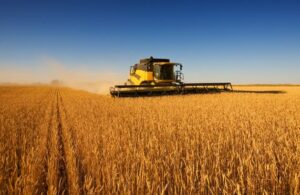
Over recent decades, agricultural commodities have been transformed from goods into financial assets. Markets anticipate future disruptions and push prices up faster than underlying conditions would justify. Credit: Bigstock
By Mihaela Siritanu
LONDON, Apr 29 2026 (IPS)
As the United States and Israel’s 2026 attack on Iran remains on pause, most eyes have fixed on oil. Tankers reroute around the Strait of Hormuz, oil benchmarks climb, and insurance costs spike. But while the headlines focus on energy, warning signs are already flashing from the food commodities markets.
Middle East tensions continue to escalate, but global wheat and maize supplies remain relatively well stocked and production has not been significantly disrupted. Yet UK wheat futures have risen to almost £183 per tonne — their highest level since mid-November — after rising more than £2.60 in a single week. At the same time, fertiliser prices — a key input for future harvests — have doubled since the start of the year, even though the main impacts on crop production have yet to materialise.
These are early warning signs — not of a harvest failure, but of how today’s food system responds to crisis. Food prices are beginning to rise, with the FAO Food Price Index steadily increasing in February and March 2026, even though crops have not yet failed, harvests have not collapsed, and global production remains broadly stable. The crisis is unfolding in real time, before any physical shortage has fully materialised.
Of course, real factors matter — but they operate very differently. When oil prices rise, they feed into food production through higher fertiliser costs, more expensive transport, and increased energy use on farms.
But these are gradual pressures: they work their way through the system over months, as farmers purchase inputs, plant crops, and bring harvests to market. Prices linked to these costs would normally rise slowly, in step with actual changes in production.
Instead, prices are moving immediately, driven less by current shortages than by expectations of what might happen. Markets anticipate future disruptions and push prices up faster than underlying conditions would justify. In this system, financial markets are no longer simply reflecting reality — they are actively reshaping it.
Over recent decades, agricultural commodities have been transformed from goods into financial assets. Wheat, maize, and rice are now traded not only by farmers and merchants, but by hedge funds, investment banks, and institutional investors seeking returns.
In wealthier countries, higher food prices squeeze household budgets. In much of the Global South, where food accounts for a larger share of income, the same increases can push families into hunger. Import-dependent countries must pay prices set on global markets even when local supply conditions remain stable
Financial instruments such as commodity index funds channel large volumes of capital into these markets, often detached from real supply and demand. Large trading firms straddle both physical and financial markets, allowing them to profit from volatility, rather than mitigate it.
When geopolitical shocks occur, this capital moves quickly. Investors position themselves ahead of expected disruptions, driving up futures prices that then feed through to importers, retailers, and consumers. The Iran crisis is therefore not just raising costs, it is activating a financial system primed to amplify them.
The consequences are global but uneven. In wealthier countries, higher food prices squeeze household budgets. In much of the Global South, where food accounts for a larger share of income, the same increases can push families into hunger. Import-dependent countries must pay prices set on global markets even when local supply conditions remain stable.
These pressures do not remain purely economic. Food price spikes can have destabilising political effects. Rising costs of staple foods have long been linked to social unrest, including in the lead-up to the Arab Spring, when increases in bread prices contributed to protests across North Africa and the Middle East. This reflects a broader pattern in which rising food costs – amplified by market speculation – increase the likelihood of unrest by intensifying existing social and economic grievances.
This helps explain a persistent paradox: hunger continues to rise in a world that produces more than enough food. The problem is not simply production, but access – and increasingly, how prices are formed.
That system was built over decades: on one hand through the deregulation of commodity markets in the Global North, which opened the door to large-scale speculative investment, and on the other, deregulation exported globally through IMF and World Bank programmes that promoted market liberalisation, privatisation, and the dismantling of public price stabilisation mechanisms, leaving many countries exposed to volatility.
The emerging food price pressures linked to the Iran conflict should therefore be understood as more than a temporary shock. They are a warning signal. If prices can spike before shortages occur, then food insecurity is no longer just a matter of supply. It is a function of how markets are organised.
Until that system is addressed, each new geopolitical crisis — whether in Iran or elsewhere — will continue to reverberate through food markets in ways that deepen inequality and intensify hunger. The next food crisis is not just growing in the fields. It is already being priced in.
Mihaela Siritanu is a political economist for the Bretton Woods Project