Dry Wells, Dry Lives: Drought Threatens Rendille Communities in Marsabit, Kenya
23 September 2026agnes
.jpeg?itok=-OUCfAKj)
Rendille Indigenous Community Faces Growing Water Crisis as Climate Change Intensifies Drought
By Damaris Lenantare (Rendille, CS Journalism Fellow)
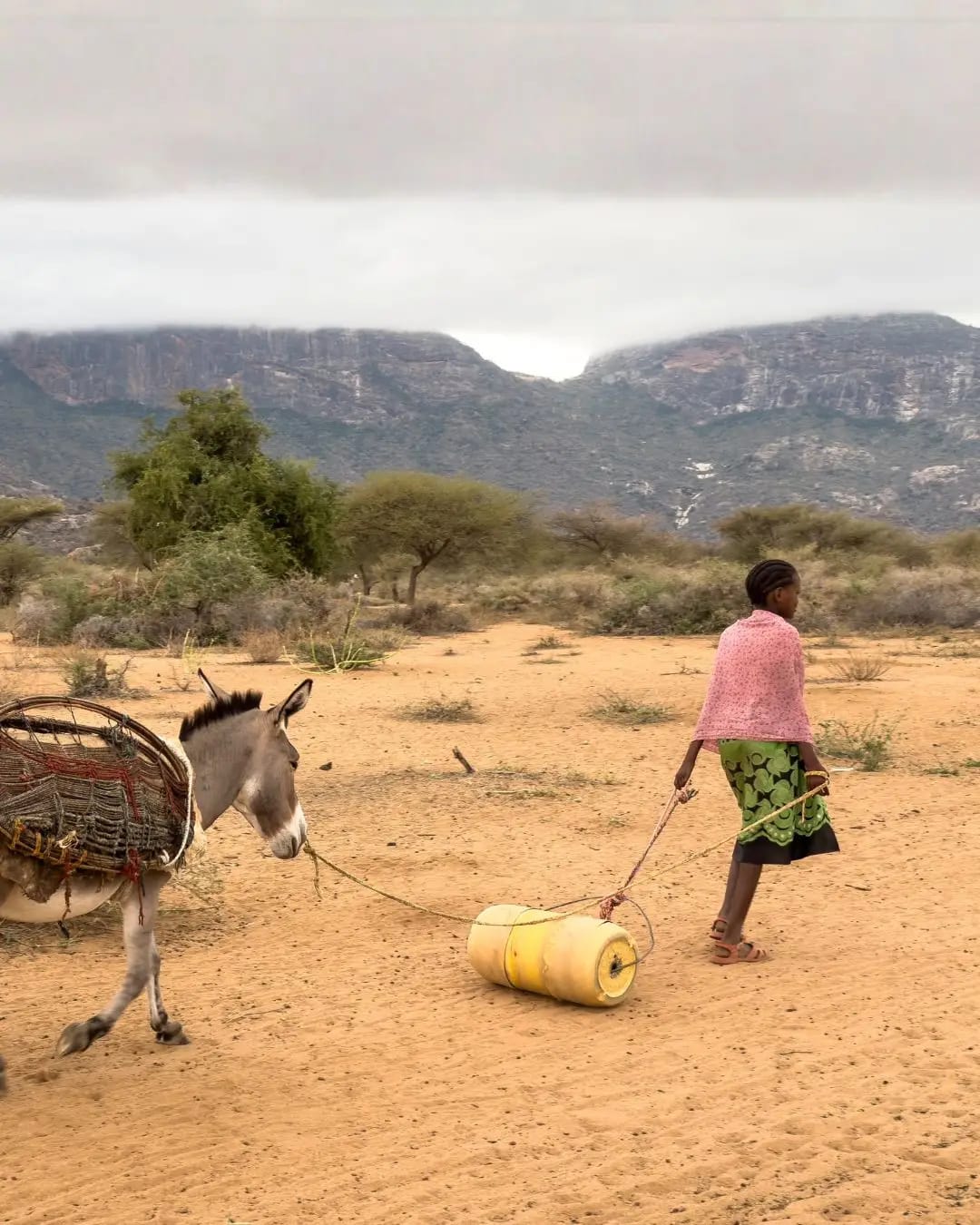
Before sunrise, women and children in the dry lands of Marsabit, Kenya, begin their daily search for water. Carrying ropes, empty jerricans, and the hope of finding enough water for their families, they gather around shallow hand-dug wells carved into sandy riverbeds in areas such as Korr and Laisamis. They wait patiently for their turn to lower containers into narrow holes and collect whatever little water remains underground.
For some families, the wait lasts an entire day. For others, it means spending the night beside the wells, hoping to fill even a single 10-liter jerrican before returning home. For years, women in Marsabit’s villages have measured their lives in queues for water rather than hours of the day. But today, the struggle has intensified as prolonged droughts and shifting rainfall patterns continue to deplete the region’s already limited water sources.
“Water sources are no longer recharging as they used to. Across Marsabit County, rains have become less predictable, and prolonged droughts are drying up rivers, water pans, and wells faster than they can recover,” said Guyo Guracho, an officer with the National Drought Management Authority (NDMA).
He added that even boreholes, which traditionally provided reliable water access, are producing less water than before, forcing communities to spend long hours at water points to collect small amounts for their families and livestock.
.jpeg)
Unsafe Water, Growing Health Risks
For many pastoralist communities, these shallow wells remain their only source of water for drinking, cooking, washing, and caring for livestock. However, the water quality is often poor. Strong winds carry dust and debris into open wells, while unpredictable rains wash human and animal waste into water sources. As a result, contaminated water exposes families to serious health risks.
High salinity levels have also become a major concern. Salty water affects taste and quality, while prolonged consumption may increase health risks, particularly among women. Despite these challenges, communities continue to rely on these sources because few alternatives are available.
A Crisis Beyond Water
Humanitarian organizations working in Marsabit warn that the situation continues to worsen as drought conditions persist. Emergency interventions, including borehole rehabilitation, water trucking, and construction of water infrastructure, have provided temporary relief to some communities. However, thousands of households remain vulnerable.
The lack of clean water has affected hygiene practices and increased the risk of waterborne diseases, including cholera and typhoid. Health workers are especially concerned about children, whose vulnerability is heightened by poor nutrition.
But perhaps the most devastating impact of water scarcity is the growing malnutrition crisis among the Rendille Indigenous communities and other pastoralist groups in Marsabit. As water sources disappear and livestock numbers decline, families lose access to milk — a critical source of nutrition for many pastoralist households.
Finding Solutions Through Innovation
Pastoralists Community Initiative and Development Assistance (PACIDA), a public benefit organization, responded to the region’s water challenges by drilling a borehole to provide a long-term solution. When they found water, the community celebrated after years of relying on shallow wells.
The borehole produced approximately 40,000 liters of water per hour, raising hopes that the water crisis could finally ease. However, testing revealed high salinity levels, making the water unsuitable for human consumption. Instead of abandoning the project, PACIDA worked with partners to find an alternative solution. With support from Caritas, PACIDA secured funding to build and install a reverse osmosis desalination plant, which began operations in 2025. The technology aims to remove excess salts and make the groundwater safe for community use.
Women, Children, and Vulnerable Groups Bear the Burden
The water crisis has placed additional pressure on women, who are traditionally responsible for collecting water in many households. Long journeys to water points consume time that could otherwise be spent on education, income-generating activities, or caring for children.
Expectant women and breastfeeding mothers are also facing increased risks due to food shortages and inadequate nutrition. Health experts warn that without sustained intervention, the effects of drought could continue to affect future generations.
Climate Change Driving a Long-Term Emergency
Marsabit’s water crisis is part of a wider climate challenge affecting Kenya’s arid and semi-arid regions. Rising temperatures, unpredictable rainfall, and longer drought cycles are transforming landscapes that pastoral communities have depended on for generations.
Across areas such as North Horr, Laisamis, Moyale, and Saku, communities are witnessing drying water sources, declining pasture, and increasing livestock losses. For pastoralists, livestock are more than economic assets. They provide food, income, education support, and cultural identity. As herds decline, families lose their main source of survival.
Communities Continue to Adapt
Despite overwhelming challenges, communities in Marsabit continue to show resilience. Some pastoralists are shifting from cattle to drought-resistant animals such as camels and goats. Others are adopting rainwater harvesting techniques and participating in community initiatives aimed at reducing conflicts over scarce resources. Local leaders, humanitarian organizations, and development partners continue working to address immediate needs while advocating for long-term solutions.
However, experts emphasize that emergency support alone cannot solve the crisis. The crisis requires greater investment in climate-resilient infrastructure, sustainable water systems, drought preparedness, and nutrition programs.
.jpeg)
A Future Hanging in the Balance
In Marsabit, drought is not only drying up water sources and killing livestock. It is threatening health, education, livelihoods, and the future of a generation. Behind every statistic is a family waiting for rain, a mother searching for water, a herder watching livestock grow weaker, and a child going to bed hungry.
The experiences of Marsabit’s communities serve as a reminder that climate change is not a distant threat. It is a reality being lived every day. For the people of the Rendille community, every drop of water represents survival — and every dry well represents a deeper crisis.
–Damaris Lenantare (Rendille) is a 2026 Cultural Survival Indigenous Journalism Fellow. She is a journalist and Indigenous women’s rights activist from Kenya. She specializes in radio program production and short video reporting to amplify the voices of Indigenous Peoples, focusing on land rights, climate change, and cultural conservation in northern Kenya.