
Empowering Indigenous Youth: Livelihoods, Resilience, and Cultural Stewardship
13 Oktober 2026agnes
By Georges Theodore Dougnon (Dogon, CS Staff)
Across Indigenous communities, young leaders are creating opportunities that connect sustainable livelihoods with the protection of their lands, cultures, and knowledge. With support from Cultural Survival’s Indigenous Youth Fellowship, Louivenzia Komases (Nama) in Namibia and Mommon Makko (Maasai) in Tanzania are putting this vision into practice.
Louivenzia Komases (Nama) from Namibia
Louivenzia Komases works at the intersection of youth leadership, civic engagement, and public management. Trained in political science and international relations, she grounds her work in both academic governance frameworks and the lived realities of marginalized rural and Indigenous communities. Her professional experience includes policy-oriented research on media integrity and democratic participation with the Institute for Public Policy Research, where she contributed to work addressing misinformation and democratic accountability. She has also held advisory and coordinating roles within the Nama Traditional Leaders Association Youth Forum, engaging directly with Indigenous governance structures, intergenerational dialogue, and community-based advocacy.
Under Cultural Survival’s Indigenous Youth Fellowship, she implemented a project called “Indigenous Economies for Resilient Futures: Youth Training in Social Entrepreneurship and Sustainable Livelihoods,” focusing on the practical revitalization of Indigenous economies as a pathway to youth resilience and self-determination. Her fellowship project responded to the enduring socioeconomic and cultural consequences of the 1904 – 1908 Nama and Ovaherero Genocide and apartheid-era marginalization. For many Nama youth, unemployment and limited economic opportunities intersect with the loss of ancestral land and weakened connections to Indigenous knowledge systems. The project approached entrepreneurship as a way to address these interconnected challenges while strengthening cultural identity.
.jpg)
Implemented during the NTLA Annual Genocide Remembrance Week in April 2026, in !Nami≠nüs (Lüderitz), Namibia, the initiative brought together 20 Indigenous Nama youth from different clans. By situating the training within a period of collective remembrance, Komases connected practical enterprise development with reflection on ancestral identity, healing, and the protection of historical memory.
The training unfolded in two phases. Participants first explored Indigenous economies, ethical stewardship, and the protection of Indigenous intellectual property. They then developed practical enterprise skills using an Indigenous Business Model Canvas, alongside exercises in financial management and storytelling. Training and mentorship helped participants consider how their business ideas could generate income while respecting the knowledge and cultural practices on which they were based.
A key development was the introduction of the Indigenous Knowledge Pitch Deck (IKP-Deck), a platform through which 10 youth entrepreneurs presented business concepts rooted in cultural preservation and ethical stewardship. Their ideas included cultural tourism, traditional Nama cuisine, herbal teas, contemporary jewelry, and cultural villages. The presentations offered participants an opportunity to articulate their ideas, practice public speaking, and connect their learning to potential livelihood activities.
.jpg)
The project also extended into civic engagement through support for the Hands Off Shark Island campaign, which opposes port expansion at the site of a former concentration camp used during the genocide. This engagement connected discussions of economic resilience with the protection of ancestral places, cultural dignity, and historical memory. It invited participants to consider how economic development can respect the places and histories that communities hold sacred.
Implementation required flexibility and care. Participants traveled long distances from remote Nama communities, creating logistical challenges, while limited funding restricted participation despite strong interest. The presence of young mothers caring for babies underscored the need to accommodate participants’ caregiving responsibilities. Discussions surrounding genocide remembrance also carried emotional weight and required sensitive facilitation.
.jpeg)
Collaboration among organizers, traditional leaders, facilitators, mentors, and youth helped the project navigate these challenges. Cultural respect, peer support, and attention to participants’ emotional needs shaped the learning environment. Traditional leaders provided guidance, while the introduction of the IKP-Deck created an additional opportunity for participants to put their learning into practice and pursue continued mentorship.
Through the project, participants developed skills in business planning, financial management, market analysis, and public speaking. The activities also strengthened intergenerational relationships and awareness of Indigenous intellectual property protection. These are early foundations for enterprise development; translating business concepts into sustainable livelihoods will require continued support and mentorship.
For other fellows, Komases’s experience offers several lessons: ground projects in community realities and lived histories, keep Indigenous communities central to decision-making, and connect practical skills with cultural preservation. Her approach also highlights the importance of engaging elders and youth, responding sensitively to historical trauma, and remaining flexible as participants’ needs and ideas emerge.
“With gratitude to Cultural Survival and the Nama Traditional Leaders Association, this project has laid the foundation for Indigenous youth entrepreneurship, cultural preservation, and community resilience,” Komases says. “Indigenous economies offer pathways to livelihoods, healing, dignity restoration, and self-determination.”
Mommon Makko (Maasai), Tanzania
Mommon Makko is an environmentalist specializing in dryland agriculture and rangeland restoration. Currently serving as project coordinator for the Nyangulo Environmental Conservation Alliance in Northern Tanzania, he has more than five years of leadership experience in this role. His work focuses on evidence-based, community-driven solutions to address desertification and climate change.
Under the Cultural Survival Youth Fellowship grant, the youth collective developed the Green Dryland Initiative, a community empowerment effort called “Turning Drylands into Green Hope” in Malambo Ward, Northern Tanzania. Through community meetings, training, and collective restoration activities, the initiative encourages pastoralist communities to take an active role in protecting the land that sustains their livelihoods.
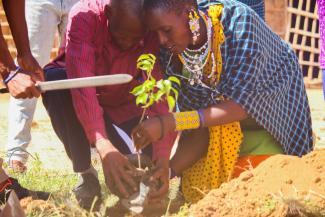
Working on degraded sites selected with community agreement, the project participants planted 200 indigenous trees. The species were chosen for their suitability to the community’s semi-arid land conditions and their importance to the local ecosystem. As the trees establish, they are expected to help stabilize soils, reduce erosion, improve water infiltration, and support the recovery of grasses and other vegetation essential for livestock grazing.
The planting also aims to restore habitats for birds, insects, and other organisms. Depending on the species, the trees may provide dry-season fodder and help preserve plants used in traditional medicine. These anticipated benefits connect restoration to the community’s daily needs and long-term well being.
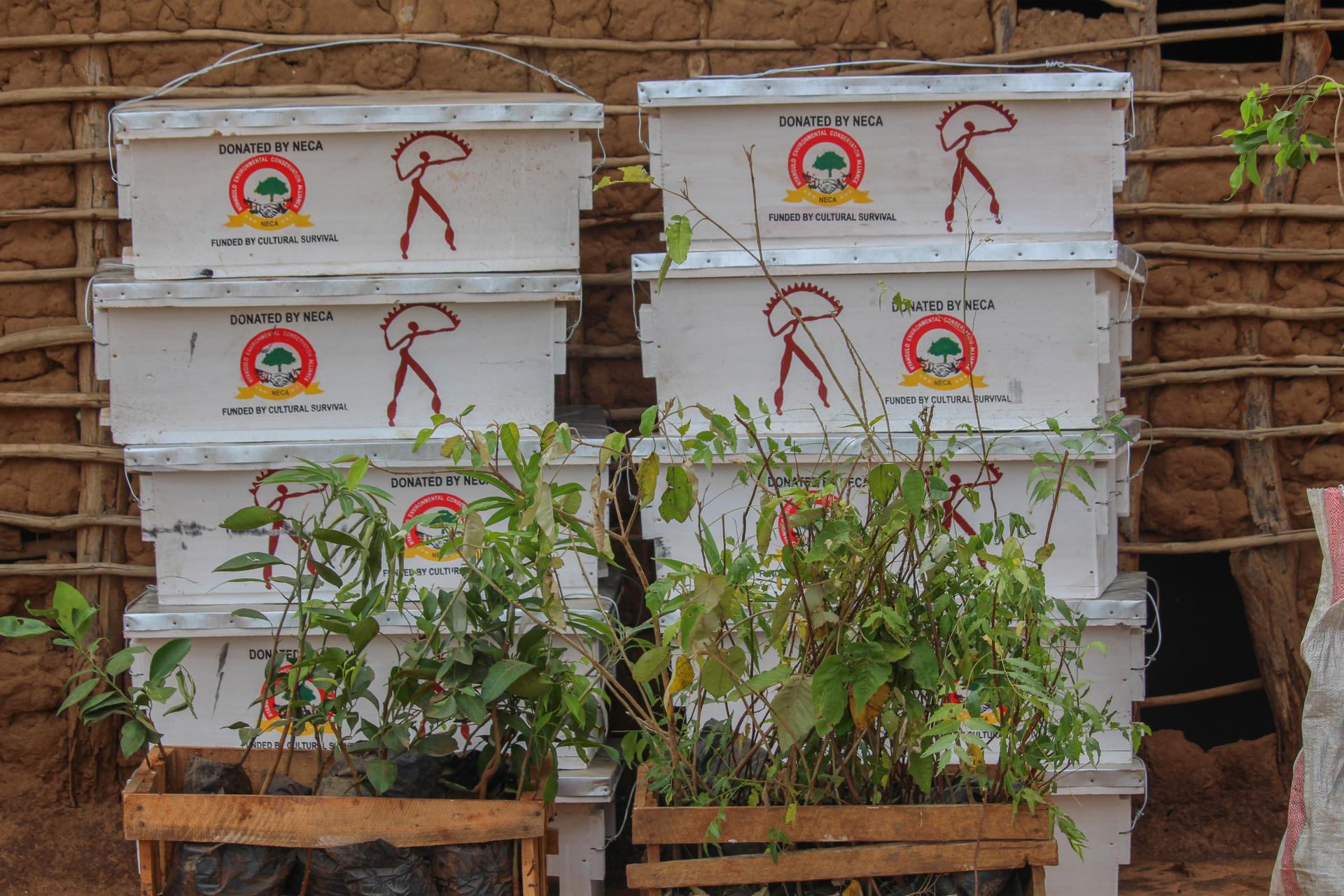
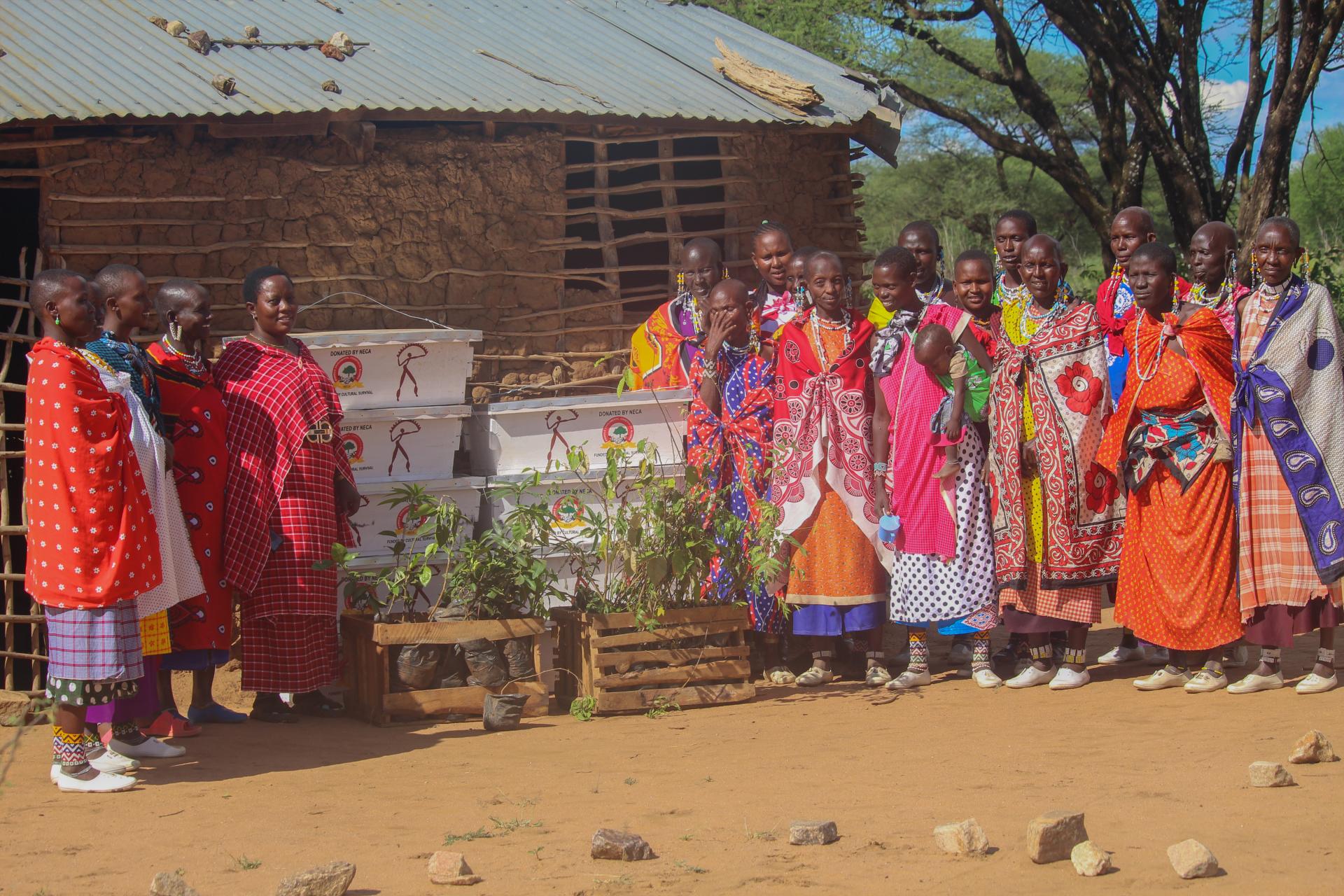
Alongside tree planting, the project distributed 10 modern beehives to the Enyuata Women Group and trained 45 community members in beekeeping. Participants learned about bee behavior, colony management, hive handling, pest and disease prevention, safe honey harvesting, and quality control during production and storage.
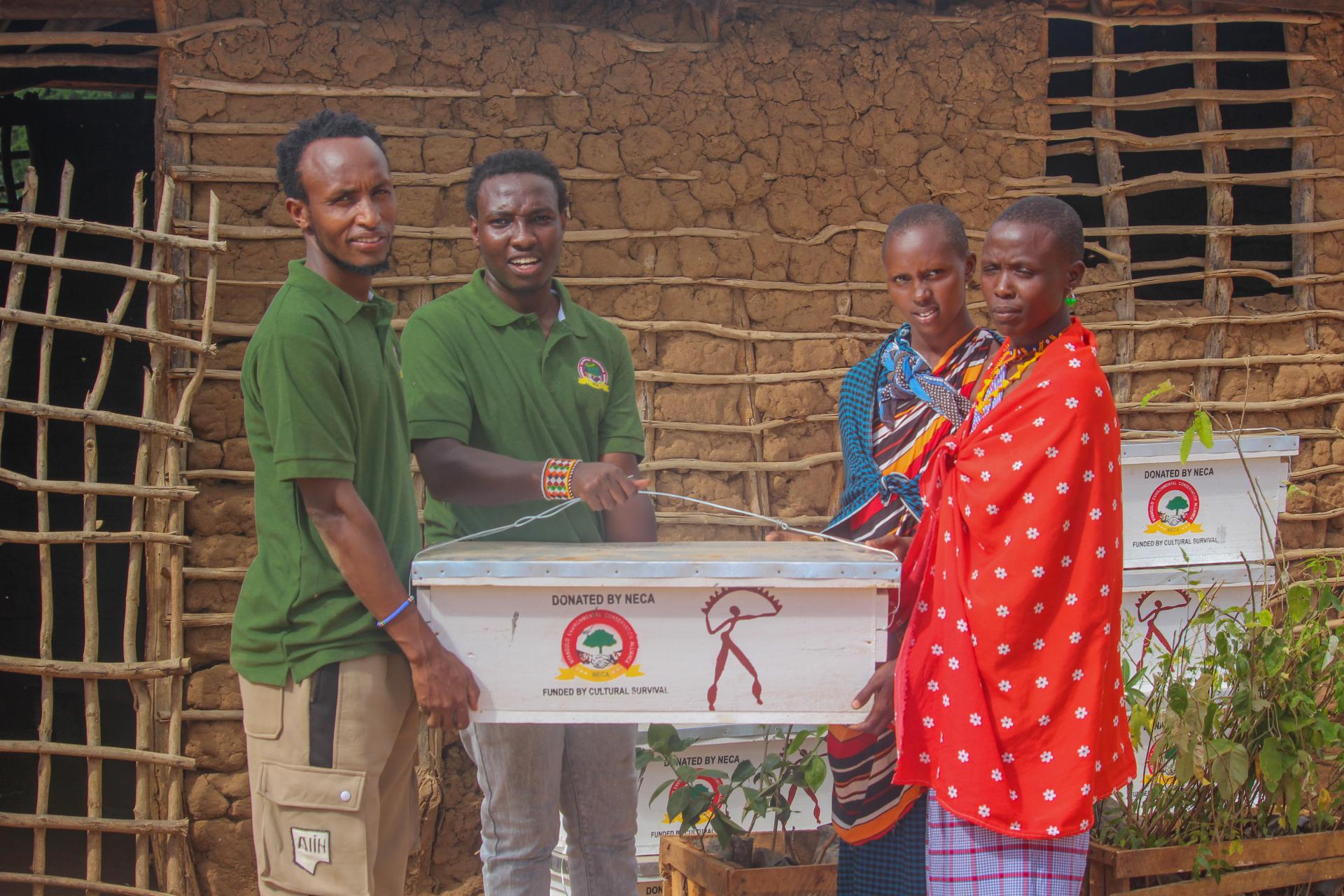
The beekeeping component offers an opportunity to diversify household income while strengthening women’s participation in local conservation efforts. It also connects livelihoods with ecosystem recovery: healthy vegetation provides resources for bees, while pollination supports the reproduction of many flowering plants. As the activity develops, honey production could provide an additional source of income and an incentive to protect restored areas.
To support continuity, the project established Climate Action Plans Committees (CAPs), bringing together local leaders, women representatives, youth, and pastoralists. These committees coordinate restoration activities, monitor tree survival and growth, and oversee the use and maintenance of the beehives. They also mobilize community participation and raise awareness about climate change and environmental conservation. Their responsibilities extend to a challenge central to rangeland restoration: balancing grazing needs with the protection of recovering vegetation. The committee also provides a space to discuss land use and resolve conflicts, helping communities shape conservation practices around local realities. Their work draws on Indigenous knowledge alongside practical conservation approaches, strengthening local ownership and the capacity to sustain activities beyond the fellowship.
For Mommon, the project’s activities are connected parts of a broader effort to strengthen community resilience. Tree planting supports landscape recovery, beekeeping creates potential livelihood opportunities, and inclusive governance gives community members a role in guiding and maintaining both.
The planting, training, and establishment of local committees mark important early steps. Longer-term results will depend on continued care for the trees, successful hive management, and sustained community participation. Through the Green Dryland Initiative, Mommon and NECA have created a foundation for that shared work.
“The support from Cultural Survival has been instrumental in enabling these outcomes,” Mommon says. “Continued investment in such integrated approaches will be essential for scaling restoration efforts, enhancing community resilience, and ensuring long-term environmental sustainability in Malambo Ward and beyond.”