Art as Memory, Resistance, and Identity: A Conversation with Bepbere Pat-i Kayapó
8 Juli 2026agnes
By Pablo Xol (Maya Q’eqchi’, CS Staff)
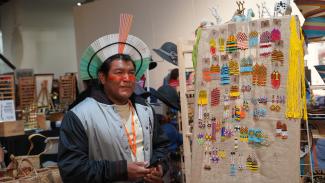
Mainstream art narratives often belong to pristine galleries and urban centers, leaving the profound creations of Indigenous territories to be categorized merely as “simple handicrafts.” It is against this backdrop of cultural prejudice and appropriation that Bepbere Pat-i Kayapó (Mẽbêngôkre Kayapó), an artist from the Indigenous Territory in Southern Pará, Brazil, has forged a resilient path. As a multimedia creator working with traditional beaded crafts, headdresses, body paint, and audiovisual production, and as a member of the Pykôre Indigenous Association, a collective primarily involving women, Bepbere uses storytelling and archiving to bridge generations. Refusing to let his people’s history be erased or distorted by land invasions, illegal mining, and external pressures, his work reclaims a space of total belonging and memory. For him, true resistance is found not in commercial spectacles, but in the everyday acts of survival: gathering with Elders to learn ancestral knowledge, protecting the forest and rivers, and creating an archive to remind younger generations that their culture is not for sale, but a vital safeguard for their future. Cultural Survival recently spoke with Bepbere Pat-i Kayapó.
Cultural Survival: What is your creative process like? How do you choose or gather the materials you use in your work? What do these materials represent to you?
Bepbere Pat-i Kayapó: Sometimes, when I have work to do, I organize myself to create the process. I make a folder to store my photos and videos. That is how I do it.
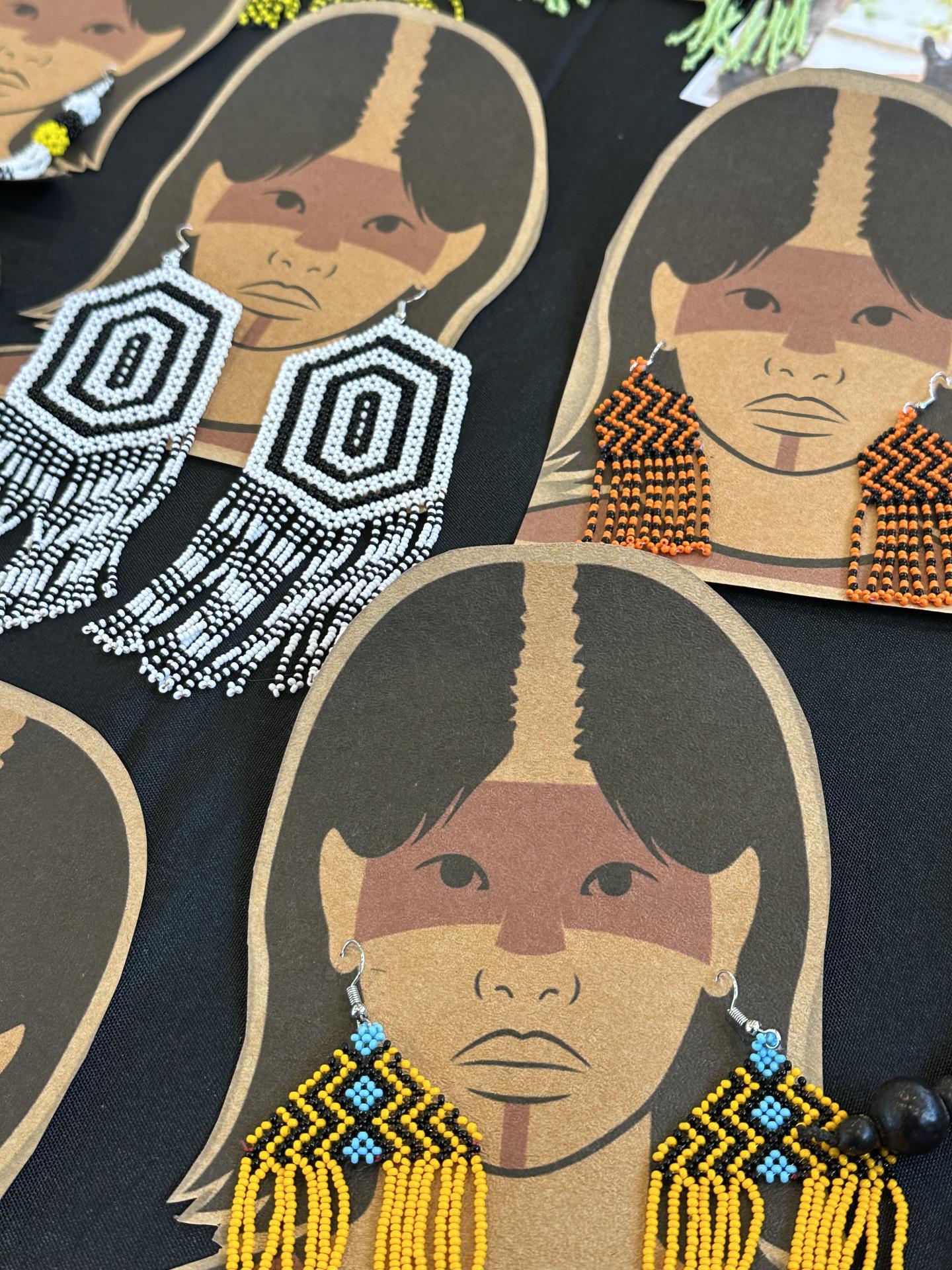
The materials are very important to me because, when I make a film about history or record the words of an elderly man or woman, I preserve them for the future. I also often use beads, painting, headdresses, a cell phone, video, and photography. For me, these materials help show our culture, our memory, and our way of life.
CS: How did you begin creating art? What has your journey as an artist been like, and what makes your work stand out from others?
BPK: I began creating art by watching other people do it. I saw them, and I started doing it too.
My journey as an artist has been built from lived experiences, identity, and a commitment to what I represent. Each step I take carries not only learning, but also the responsibility of expressing stories, cultures, and struggles that are often not heard.
Over time, I developed my style based on my origins, my experiences within the community, and my contact with different forms of art. What makes my work stand out is precisely this true connection with my essence. It is not only about aesthetics, but about the message. My work carries identity, has purpose, and speaks directly both to those who understand it and to those who need to know this reality.
I seek to value the culture, strengthen the voice of my people, and show that art is also a form of resistance.
CS: Can you give me a specific example of a work, film, photograph, handicraft, or project that is very important to you? Why is this work special?
BPK: There is a basket used to carry firewood, cassava, and other things. This work is important because it is part of community life and shows the knowledge of our people. It is not just an object: it carries everyday usefulness, memory, and the way the community preserves its knowledge.
CS: When you say that you preserve photos, videos, and the words of elders for the future, what do you hope young people will learn from these records?
BPK: I hope young people will look for these records to see the photos and videos, learn more about our history, and learn from what has been preserved. These records help young people see, know, and remember the culture, the words, and the teachings of the elders.
CS: What challenges do you face as an Indigenous artist?
BPK: Being an Indigenous artist today involves a lot of strength, but also many challenges. Among the main ones are the lack of appreciation and recognition, because Indigenous art is often still seen as “simple handicraft” rather than as a rich artistic expression with history, meaning, and identity, which makes it difficult for the work to receive fair recognition.
Another challenge is cultural appropriation, when people from outside use Indigenous symbols, designs, and cultural elements without understanding or respecting their meaning, which can devalue and even distort the culture.
There is also limited access to spaces and opportunities, since exhibitions, galleries, calls for proposals, and cultural events do not always include or facilitate the participation of Indigenous artists, especially those who live in more remote territories.
Economic difficulties are also a reality, because making a living from art can be difficult, and artists often do not receive a fair price for their work or face obstacles in selling and promoting their creations.
In addition, prejudice and invisibility continue to be present, causing many Indigenous artists to struggle to be heard and respected both inside and outside their communities.
There is also the challenge of maintaining tradition while engaging with the contemporary world, preserving culture, knowledge, and roots while adapting to new forms of expression, such as social media and contemporary art.
Despite all of this, Indigenous art is resistance: it is a way of keeping culture alive, telling stories, strengthening the people, and showing the world that Indigenous Peoples are still alive, creating, and teaching.
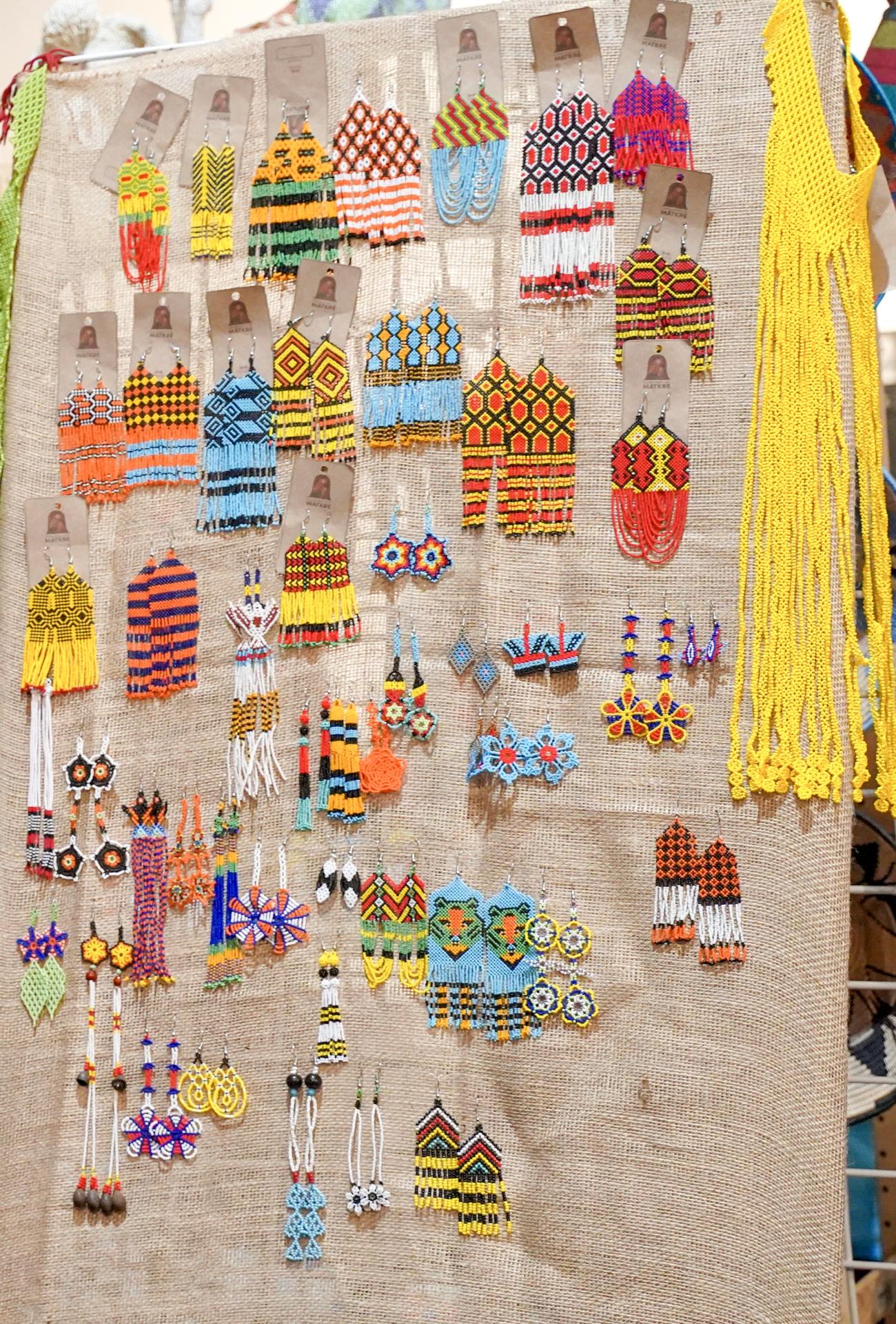
Cultural Survival: What is the importance of handicrafts and artistic expression for your culture and your community?
BPK: Handicrafts and artistic expression have very deep importance for the culture and the community, especially for Indigenous Peoples such as the Kayapó/Mebêngôkre people.
First, handicrafts are a way of keeping tradition alive. Each piece — such as necklaces, body paintings, headdresses, or baskets — carries knowledge that is passed down from generation to generation. It is not just a beautiful object: it is history, identity, and the memory of the people.
In addition, art is a form of cultural expression. Through drawings, colors, and forms, the community shows its relationship with nature, with spirits, with animals, and with the territory. It is its own language, one that communicates who we are and how we see the world.
It also plays an important role in community unity. Many times, handicrafts are made collectively, involving families, young people, and elders. In this process, the elders teach and the younger ones learn, strengthening respect and the bond between generations.
Another point is cultural appreciation and resistance. In a world where many Indigenous cultures are threatened, handicrafts and art help affirm: “we exist, our culture is strong, and it is not for sale in the sense of losing its essence.” It is a form of struggle and affirmation.
It can also generate income for the community in a sustainable way, without destroying the forest. This helps families’ autonomy while keeping the culture alive.
CS: What challenges do Indigenous Peoples currently face in your country?
BPK: In Brazil, Indigenous Peoples currently face several challenges. These problems are old, but they continue today, especially in the Amazon region.
Among the main challenges are land invasions and illegal mining, since many Indigenous lands are invaded by miners, loggers, and land grabbers, causing forest destruction, river contamination, including by mercury, and conflicts with communities.
Another important problem is land demarcation, which, although it is a right guaranteed by the Constitution, still happens slowly, leaving many areas without legal regularization. This increases the vulnerability of Indigenous Peoples and generates conflicts.
Climate change also directly affects life in the villages, making hunting, fishing, and planting more difficult, in addition to causing biodiversity loss.
Furthermore, many Indigenous leaders suffer violence and threats for defending their territories, especially in contexts linked to land disputes and illegal exploitation.
The lack of adequate access to health care and education also continues to be a major challenge, especially in communities located in isolated regions, directly affecting quality of life.
Added to this are prejudice and social exclusion, since Indigenous Peoples still face discrimination, invisibility, and difficulties in having their rights fully respected in society.
Finally, there is also cultural loss and external pressure, since the advancement of non-Indigenous society and other outside influences can threaten traditions, languages, and ways of life.
In summary, the greatest challenges today are connected to defending the territory, guaranteeing basic rights, and preserving culture and the environment. Even with all of this, Indigenous Peoples continue fighting, organizing themselves, and showing their strength to protect their lands, their culture, and their future.
CS: Where has your art already been presented or exhibited? Do you remember in which festivals, talks, fairs, or events your art has been presented?
BPK: Our art has been shown at festivals, talks, and fairs, where we present our work and our culture. Among the spaces mentioned are the Círio de Nazaré, events at Vale, COP30, and the CS Bazaar.
.jpg)
CS: What do spaces such as the Cultural Survival Bazaar offer Indigenous artists? How have they helped — or how could they help more?
BPK: Spaces such as the CS Bazaar function as environments of visibility, exchange, and income generation for Indigenous artists. They offer artistic exhibition space, where artists can present their works, such as paintings, photographs, handicrafts, fashion, and bio-jewelry, to the public. These events help bring Indigenous art out of invisibility and into broader galleries, fairs, and cultural circuits.
They also offer space for commercialization, allowing artists themselves to sell their creations without intermediaries, generating income for their communities. In addition, they are spaces of cultural appreciation. It is not only about selling, but also about cultural affirmation. Artists show their traditions, designs, natural materials, and ancestral knowledge, reinforcing identity and resistance.
These events also create exchange and dialogue, bringing Indigenous artists closer to the non-Indigenous public and creating respect and learning about original cultures. Participating in a bazaar can also open doors to new opportunities, such as exhibitions in galleries, invitations to larger events, and partnerships with brands, designers, and institutions.
The Bazaar changed a lot for the community, and for me, because the community was very happy with the sales, the learning, and the invitations. This is important for the community because it also allows us to show who we are and show our culture.
The Bazaar helped us sell some handicrafts and also helped the women. This is very important for Indigenous Peoples and for those who make art with wisdom. It could help more by bringing, every year, the handicrafts of women and men as well, and by showing our culture. Not only showing the handicrafts, but also our culture. This is very important.
CS: How does your art help safeguard or express the identity, knowledge, and traditions of your people?
BPK: Art is a very strong way of keeping alive the identity, knowledge, and traditions of a people. In the case of Indigenous Peoples, such as the Kayapó/Mebêngôkre people, art is not only aesthetic — it carries history, teachings, and spirituality.
Through body paintings, songs, dances, designs, and handicrafts, art transmits knowledge that is passed down from generation to generation. Each design has a meaning: it may represent nature, animals, spirits, or important moments in community life. In this way, younger people learn from the elders, keeping the culture alive.
Art also expresses the identity of the people. When an Indigenous person paints their body or wears a traditional adornment, they are showing who they are, where they come from, and which group they belong to. This strengthens cultural pride and helps resist external pressures that try to erase these identities.
In addition, art is a form of struggle and communication with the world. In events, gatherings, and mobilizations, it shows other people that the people are still alive, with a strong culture, and that they deserve respect. It is a way of saying: “our culture exists and is not for sale.”
Finally, art preserves the relationship with nature. Many elements used come from the forest, rivers, and animals, showing respect and care for the territory. Therefore, preserving art also means preserving the environment and the people’s way of life.
CS: What would you like people from outside your community to understand when they see your work?
BPK: What people need to understand is that we are taking our art and our culture to show it outside the community. This needs to be understood and respected. Respect is very important.
People from outside also need to understand and know the art, the culture, the tradition, and the language. This is very important so that they know that Indigenous Peoples still preserve their tradition, their ceremonies, and everything they do. Showing this outside the community is also very important.
Cultural Survival: Is there any phrase of yours, in your language or in Portuguese, that you would like to include at the end of the interview?
BPK: Yes. I would like to include this phrase: “Mejkumrej ija kam né inho cooperativa Mat Kre feira Bazar o já mji ri né.” – Our Mat Kre cooperative has a very important partnership with the Bazaar. It is very important for us to show our art and culture.
CS: Is there anything else you would like to share about your work, your people, or your experience?
BPK: Yes, there are many important things to share about our work, our people, and our experiences.
Our people carry an ancient history of resistance and wisdom. We learn from an early age to care for the forest, the rivers, the animals, and our culture. Our work is not only for today, but for the future of the next generations. The land, for us, is not just a place — it is our life, our identity, and our strength.
Today, we face many challenges, such as invasions, mining, deforestation, and lack of support in areas such as health care and education. Even so, we continue fighting, organized through Indigenous associations, leaders, and young people who are learning to defend our rights.
We are also building new paths: sustainable projects, strengthening of culture, Indigenous education, and initiatives that value our way of life. We want to show the world that we exist, that we have a voice, and that our culture is not for sale.
Our experiences show that, when we are united — leaders, communities, young people, and partners — we can move forward. But we still need respect, listening, and true support.
Our greatest objective is to continue protecting our territory, keeping our culture alive, and guaranteeing dignity for our people.
Attend the Cultural Survival Summer Bazaars—July 24–26 in Tiverton, RI and August 1–2 in Providence, RI. bazaar.cs.org