
Agrarian Conflicts Won’t Wait: Why Local Governments Must Be on the Front Line
 24 June 2026
In many villages far from the nation’s capital, land disputes can linger for years. Communities are left without certainty over the land and resources they depend on, investments stall, public services are disrupted, and local governments are forced to manage the growing social consequences. Meanwhile, complaints and grievances often have to navigate a long path to ministries based in Jakarta—hundreds or even thousands of miles away from where the conflict is actually unfolding.
This is one of the enduring paradoxes of agrarian conflict management in Indonesia. Conflicts that emerge at the local level are still largely addressed through highly centralized mechanisms. As a result, responses are often slow, case backlogs continue to grow, and issues that might have been resolved early can snowball into far more complex and costly disputes.
Yet agrarian conflicts rarely affect only one party. Communities lose security and access to their livelihoods. Governments face mounting social and political pressures. Businesses encounter uncertainty that can undermine investment decisions. When conflicts are allowed to persist, the costs borne by all stakeholders become significantly greater than the investments required for early intervention and resolution.
This raises an increasingly important question: shouldn’t conflicts be addressed as close as possible to where they occur?
In this context, local governments occupy a uniquely strategic position. They are not merely implementers of national policies; they are the public institutions closest to affected communities, most familiar with local dynamics, and best positioned to engage the diverse stakeholders involved. That proximity enables faster responses, earlier intervention, and solutions that are better grounded in local realities.
The challenges, of course, are substantial. Weak governance, uneven institutional capacity, limited fiscal resources, and rigid bureaucratic procedures can all constrain local governments’ ability to act effectively. Yet these very challenges underscore why strengthening local capacity has become such an urgent priority. Decentralizing conflict response and management is not about shifting responsibilities from the national government to local authorities. Rather, it is about equipping local institutions with the capabilities, resources, and legitimacy needed to address conflicts effectively and accountably.
It is from this perspective that CRU Indonesia, in collaboration with the Directorate General of Politics and General Government Affairs of the Ministry of Home Affairs and the Directorate for Tenurial Conflict and Customary Forest Resolution of the Ministry of Forestry, has initiated an effort to strengthen local mechanisms for responding to and managing agrarian conflicts. The initiative will be implemented in Aceh, Central Sulawesi, and East Nusa Tenggara—three provinces that have already demonstrated commitment and taken important steps toward addressing conflicts over land and natural resources, both within forest areas and on other lands.
Ultimately, decentralization is about more than the redistribution of authority. It is about building locally rooted, conflict-sensitive institutions that can respond to community grievances promptly and facilitate fair and constructive resolutions. Such institutions are essential for strengthening the tenure security of Indigenous Peoples and local communities—an enabling condition for broader sustainable development goals, including Indonesia’s efforts to adapt to and mitigate the impacts of climate change.
Perhaps the question we should be asking is no longer whether local governments can play this role, but rather how we can collectively support them in building the capacity to do so.
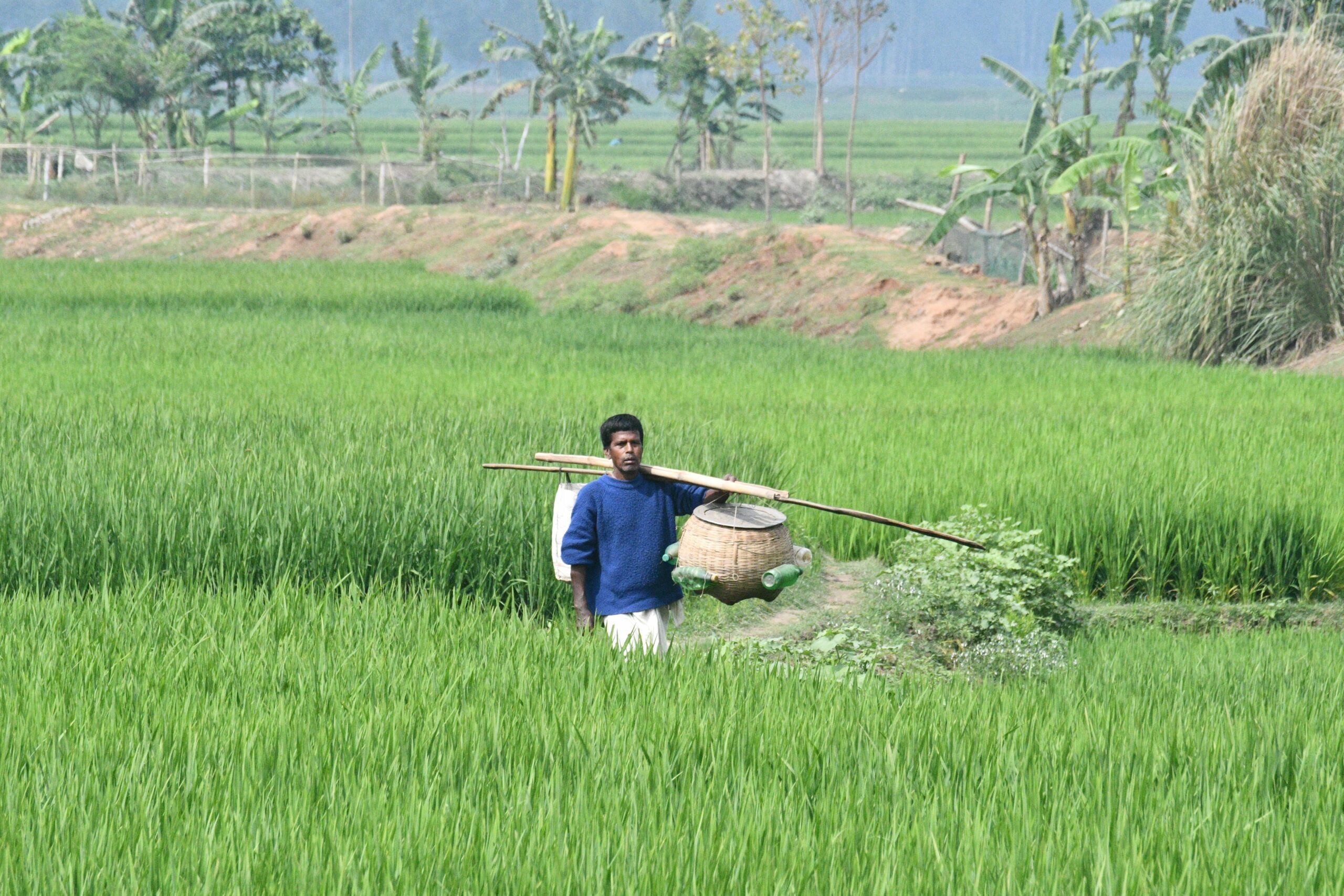
Photo by: Masudar Rahman from Pexels