Kick Off Program CRU Indonesia: Bringing Conflict Resolution Closer to Communities: Exploring the Case for Decentralization
 25 June 2026
Land and natural resource conflicts have long been a feature of Indonesia’s development landscape. Yet in recent years, these disputes have become increasingly widespread, diverse, and complex. Unclear forest boundaries, overlapping permits, competing land claims, the expansion of extractive industries, and growing pressures on land and livelihoods have all contributed to conflicts that are often difficult to resolve through centralized mechanisms alone.
Against this backdrop, an important question arose: are existing conflict resolution systems sufficiently connected to the communities they are intended to serve, and responsive enough to the realities on the ground?
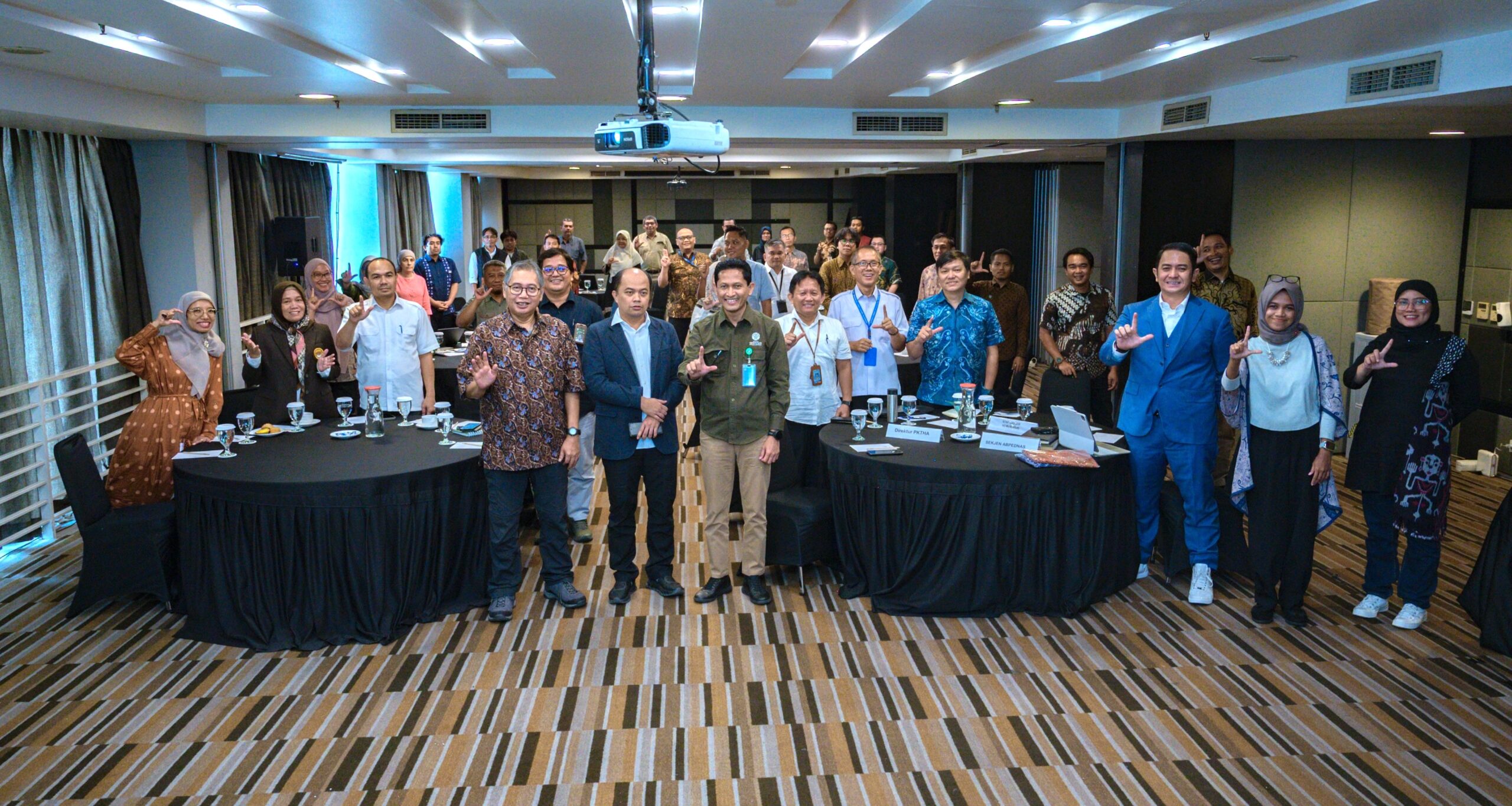
This question framed the discussions at the Kick-Off Program, “The Contribution of Civil Society Organizations to Building Decentralized Conflict Resolution Mechanisms through Strengthening Forest Management Units (FMUs),” organized by CRU Indonesia in collaboration with the Directorate for Tenurial Conflict and Customary Forest Resolution (PKTHA) of the Ministry of Forestry and the Directorate General of Politics and General Government Affairs of the Ministry of Home Affairs. The event was held on June 10, 2026, at Akmani Hotel Jakarta.
Conflicts are Local. Responses Often are Not
Opening the event, Dr. H. Apep Fajar Kurniawan, Special Advisor to the Minister of Home Affairs for Political Affairs and Network Development, highlighted a sobering reality: forestry and agrarian conflicts in Indonesia are not only increasing in number, but are also becoming more difficult to resolve.
According to government records, more than 1,655 complaints related to tenure disputes and customary forest areas have been submitted to the government. Some stemed from unresolved forest boundary issues, while others arose from overlapping claims involving communities, government agencies, and private sector actors. In many cases, what appears on the surface to be a land dispute is rooted in deeper challenges involving spatial planning, recognition of Indigenous Peoples, licensing systems, and inconsistencies in government data.
As a result, conflict resolution processes are often lengthy and cumbersome. When complaints must travel from local communities through multiple national-level institutions before returning to the local level, communities, businesses, and local authorities are frequently left navigating prolonged uncertainty. It is precisely in this context that the idea of decentralizing conflict resolution gains significance.
Decentralization is not simply about shifting authority from the national government to subnational levels. More importantly, it is about bringing conflict identification, assessment, and early response mechanisms closer to the institutions and actors that are most familiar with local realities and closest to affected communities.
Why Local Governments Matter
A recurring theme throughout the discussion was the increasingly important role that local governments could play in managing natural resource conflicts. This point was emphasized by Julmansyah, Director for Tenurial Conflict and Customary Forest Resolution at the Ministry of Forestry, who noted that most natural resource conflicts emerge within highly localized social, economic, and political contexts. Local governments understand the characteristics of their regions, know the stakeholders involved, and are often in a stronger position to facilitate dialogue and prevent disputes from escalating.
Yet proximity alone is not enough. Meaningful decentralization requires clearly defined mandates, capable personnel, effective coordination mechanisms, and adequate institutional and financial support. Without these foundations, decentralization risks becoming little more than the transfer of responsibilities without the resources needed to fulfill them.
For that reason, strengthening the capacity of local governments must be viewed as a central pillar of any effort to develop more decentralized conflict resolution mechanisms.
The Role of Civil Society Organizations and Village Institutions
Another key insight emerging from the discussion was the potential contribution of civil society organizations and village-level institutions. Indonesia’s extensive network of civil society organizations presents a valuable opportunity to strengthen early conflict detection and response at the community level. Village institutions, particularly Village Consultative Bodies (BPDs), are similarly well positioned because of their close relationships with local communities.
This perspective was highlighted by Adhitya Yusma Perdana, Chairman of Perisai Syarikat Islam and Secretary General of ABPEDNAS, speaking on behalf of the Junior Attorney General for Intelligence Affairs at the Attorney General’s Office.
Engaging village institutions could help establish more effective early-warning systems, enabling emerging tensions to be identified and addressed before they evolve into larger disputes that are more difficult to manage. From this perspective, villages should not be seen merely as places where conflicts occur, but as active contributors to conflict prevention and resolution.
Data, Knowledge, and Learning Matter
The discussion also underscored a less visible but equally important challenge: many conflicts are driven not only by competing interests, but also by competing information. Inconsistent maps, fragmented datasets, differing interpretations of regulations and spatial information, and the absence of integrated cross-sectoral data systems often create uncertainty and ambiguity that can fuel new disputes.
Building more effective conflict resolution mechanisms therefore requires more than institutional reform. It also demands stronger systems for data management, knowledge generation, and information sharing.
Toward More Responsive Conflict Management Mechanisms
The conversations throughout the event reinforced a fundamental lesson: conflicts involving land and natural resources are rarely the responsibility of a single institution, nor can they be resolved by one actor alone.
Effective conflict resolution requires collaboration—bringing together different mandates, perspectives, and interests within a framework that enables constructive engagement and shared problem-solving.
At its core, decentralization seeks to bring conflict resolution closer to the people most directly affected by it. By strengthening local capacities and fostering collaboration among stakeholders at the regional level, conflicts can be addressed more quickly, more appropriately, and in ways that are better aligned with local circumstances.
The partnership between CRU Indonesia, the Ministry of Forestry, and the Ministry of Home Affairs represents an important first step in exploring and testing this approach. Ultimately, its success will not be measured by the creation of new institutions or procedures alone, but by whether communities facing conflict gain access to resolution processes that are faster, fairer, and more sustainable.
Because in the end, the goal of conflict resolution is not simply to settle disputes. It is to create certainty, build trust, and lay the foundation for more inclusive and sustainable natural resource governance.