Reclaiming Our Narratives Through the Eyes of Indigenous Storytellers
5 Agustus 2026agnes
By Dev Kumar Sunuwar (Koĩts-Sunuwar, CS Staff)
Standing as an Indigenous journalist among more than 400 fellow Indigenous-led media professionals, reporters, broadcasters, storytellers, Indigenous media scholars, and press-freedom advocates from July 22-24, 2026, I felt a sense of belonging and a pride in reclaiming our narratives. An annual gathering, organized by the Indigenous Journalists Association (IJA) and the Indigenous Media Conference 2026 in Portland, OR, brought together Indigenous media delegates from across the United States, Canada, Australia, and the Pacific Islands. For Indigenous storytellers and media professionals who have spent decades defending the truth, the conference made a clear message: reclaiming story ownership is important for our cultural, economic, political, and environmental survival.
Observing and experiencing this conference firsthand, amid the worsening climate crisis, rapid expansion and changes in artificial intelligence, and increased threats for Indigenous journalists on the ground, was transformative. From intensive sessions of drafting a historic Indigenous Journalism Code of Ethics to panels on frontline climate reporting and digital safety, the three-day conference redefined press freedom through the lens of Indigenous self-determination.
Storytelling Sovereignty
Attending the launch of a book titled “Storytelling Sovereignty: Indigenous Peoples and the Media,” edited by Cristina L. Azocar and Meta G. Carstarphen, I felt like witnessing a masterclass in narrative reclaiming. Listening to the visionary scholars, I was reminded of the deep responsibility and honor of our work.
During the session, Dr. Cristina Azocar (Upper Mattaponi), a professor and Chair of Journalism at San Francisco State University, traced the philosophical and legal roots of Indigenous communities. She highlighted Article 16 of the UN Declaration on the Rights of Indigenous Peoples (UNDRIP), 2007, which provides the rights of Indigenous Peoples to establish media in their own Indigenous languages without discrimination.
“Indigenous storytellers carry great responsibility because media shapes every part of our lives,” Dr. Azocar emphasized. “Storytelling sovereignty is self-determination. It connects us to our past, guides our present, and shapes our future.”
Dr. Azocar explained in detail how outsiders have often misrepresented us in the media and distorted the coverage. “If we don’t tell our own stories, they are often wrong,” she said. According to her, storytelling sovereignty lets us share our stories from our own perspectives. Our voice can also then drive change in social and climate justice. Her advice was to keep telling your own stories, stay resilient, and do not let others speak for you and about you.
Fact-Checking and Protecting Sensitive Data
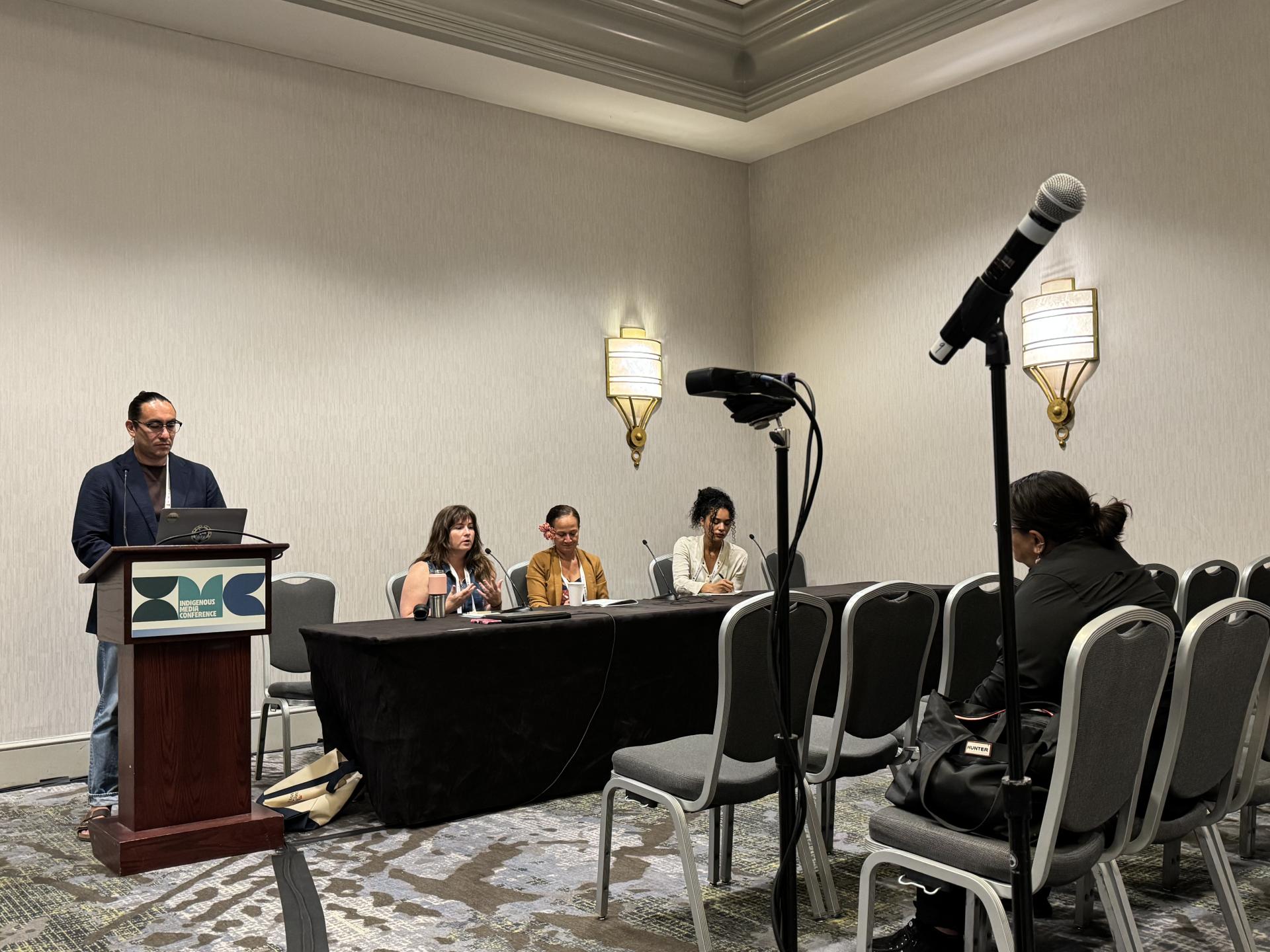
Attending the workshop titled “Fact-checking in and for Indigenous communities,” I was reminded that strong journalism requires both accuracy and respect for culture. Mary Hudetz (Apsaalooke/Crow), Director of Education and Training for the IJA, and a journalist, emphasized the need for careful verification to protect credibility and show our commitment to community trust.
“Fact-checking lets you review your stories to ensure every detail is accurate,” Hudetz said, adding, “it builds trust within communities and shows you care about how they are represented. For non-Indigenous media, it helps prevent stereotypes and mistakes.”
Hudetz highlighted that the so-called mainstream media outlets often get facts wrong by reducing the distinct cultures, treaty rights, the customs and laws of Tribal Nations to stereotypes. She stressed the importance of Indigenous data sovereignty when reporting on sensitive information about the culture, sacred knowledge, or historical trauma.
“Tribal groups have the right to review and control data about their people and community,” Hudetz said, “so much information was taken from Tribes without their Free, Prior and Informed Consent (FPIC). Now, as Tribes assert data sovereignty, the world must respect their power to protect and manage their information.” Her advice to journalists was practical: “Make fact-checking a part of your process, especially when you are covering sensitive stories. It protects your organization and ensures you do right by the communities you cover.
Frontline Climate Journalism
Listening to our colleagues from the Pacific island nation made me think that there is an urgent need for frontline climate reporting. Lagipoiva Cherelle Jackson (Samoan), Professor of Pacific Island Studies at Portland State University, described the harsh realities of the climate crisis that her communities back home are facing, from extreme weather and saltwater intrusion to damaged infrastructure and lost livelihoods.
She acknowledged major international legal milestones, such as the International Court of Justice (ICJ) Advisory Opinion and an international campaign led by Vanuatu and other Pacific Island leaders, but noted the ongoing gap between the global promises and real actions. On July 23, 2025, the ICJ issued an Advisory Opinion to the General Assembly, clarifying that States have binding obligations under international law to prevent and redress the adverse impacts of climate change and to protect the climate system as well as present and future generations.
“Pacific Islanders suffer the most from the climate crisis, yet contribute the least,” Jackson said, “Indigenous Peoples’ voices are present at climate change-related Conventions, but often not genuinely included. The real question is whether the international community will truly listen and act.”
Jackson argued that Indigenous journalists are well-qualified to bridge this gap because of their understanding of Indigenous Peoples’ cultures and lived experiences. “Indigenous Journalists, especially those from the Pacific Islands, are best positioned to tell our stories, not just about the impacts, but also about our advocacy efforts for positive change,” she said; “We know our communities are best and are the most qualified to report on our own experiences, solutions, and efforts.”
She encouraged young Indigenous Journalists to specialize in climate reporting from their own communities, to consider what Indigenous Peoples stand to lose, both tangible and intangible, and to recognize the communities’ strengths in facing the climate crisis.
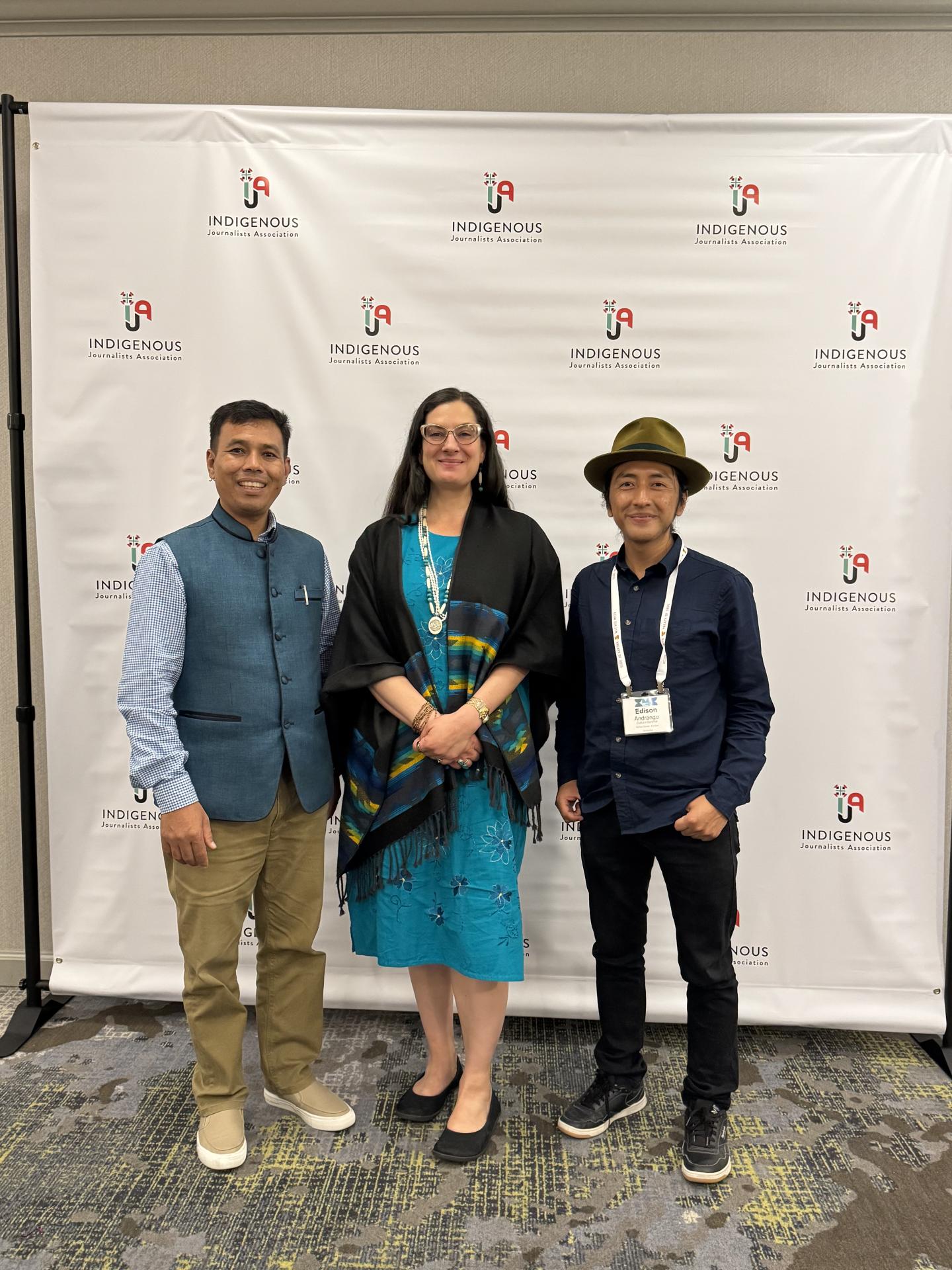
Cultural Survival Staff at the IMC: Dev Kumar Sunuwar (Koĩts-Sunuwar), Community Media Program Coordinator; Aimee Roberson (Choctaw and Chickasaw), Executive Director; and Edison Andrango (Kichwa Otavalo), Indigenous Rights Radio Program Assistant.
Field Safety
As there is increasing involvement of Indigenous Journalists in covering risky and contentious issues such as land defense actions, natural disasters, and an intense political environment, the physical safety, digital security, and mental well being; were prioritized in several workshops. The session “from assignment to exit plan: Staying Safe While Reporting and How to Cover Protests Safely provided practical advice.
Tara Gatewood (Pueblo of Isleta/ Diné), Director of the International Women’s Media Foundation (IWMF), stressed that risk assessment is rooted in traditional Indigenous survival skills. “Preparation is central to who we are as Indigenous Peoples, always thinking ahead and caring for others,” Gatewood said; “Risk management today is just an extension of that. Keeping safe is part of living well.”
Gatewood elaborated on the risks Indigenous journalists face at protests or disasters, where authorities may mistake them for demonstrators. “Sometimes people don’t see the difference,” she said, It’s important to ask oneself beforehand: Could we be a target?” She further said, “Mental stability is a key. Be sure you are rested, fed, and hydrated before entering high-stress situations. Preparation is part of our Indigenous traditions.”
Trainers Rachel Smith, Program Coordinator at IWMF, and Abigail LP, Program Manager at Freedom of the Press Foundation, shared how to conduct a risk assessment using real examples from protests like Standing Rock and other disasters. Their tips included using strong device passcodes, turning off biometrics, carrying satellite flares, mapping evacuation routes, and writing emergency contacts on the arms before entering dangerous areas.
Indigenous Journalism Code of Ethics
One of the sessions I personally enjoyed the most was brainstorming and consultation to develop the Indigenous Journalism Code of Ethics, a standard for training and a tool to guide the Indigenous journalism industry and media professionals practicing journalism in Indigenous communities.
Veteran Indigenous journalists described how western journalism rules, like banning gifts or sharing food, clash with Indigenous values of respect, reciprocity, and care. Some newsroom veterans said they had to pay their own way to support Elders and trauma survivors because editors wrongly labeled these acts as “bribes.”
To address this dilemma, IJA has begun leading the development of an Indigenous Journalism Code of Ethics, which is scheduled to launch at next year’s 2027 Indigenous Media Conference. According to IJA officials, this code will eventually help Indigenous journalists push for change in both Tribal-led and mainstream newsrooms by giving them official support.
Events like Digital Storytelling, AI reporting tools for Indigenous Journalists, Indigenous Documentary Storytelling, Indigenous Media Expo, and all other networking spaces throughout sent a clear message: Indigenous Media today is claiming its space. While standing together with hundreds of fellow Indigenous storytellers, I came to realize that storytelling sovereignty is our greatest strength. The 2026 Indigenous Media Conference, therefore, to some extent, created a space to connect, learn, strengthen our skills in sharing our own stories, and redefine press freedom from an Indigenous Peoples’ perspective, laying a strong foundation for media sovereignty that will last for generations.
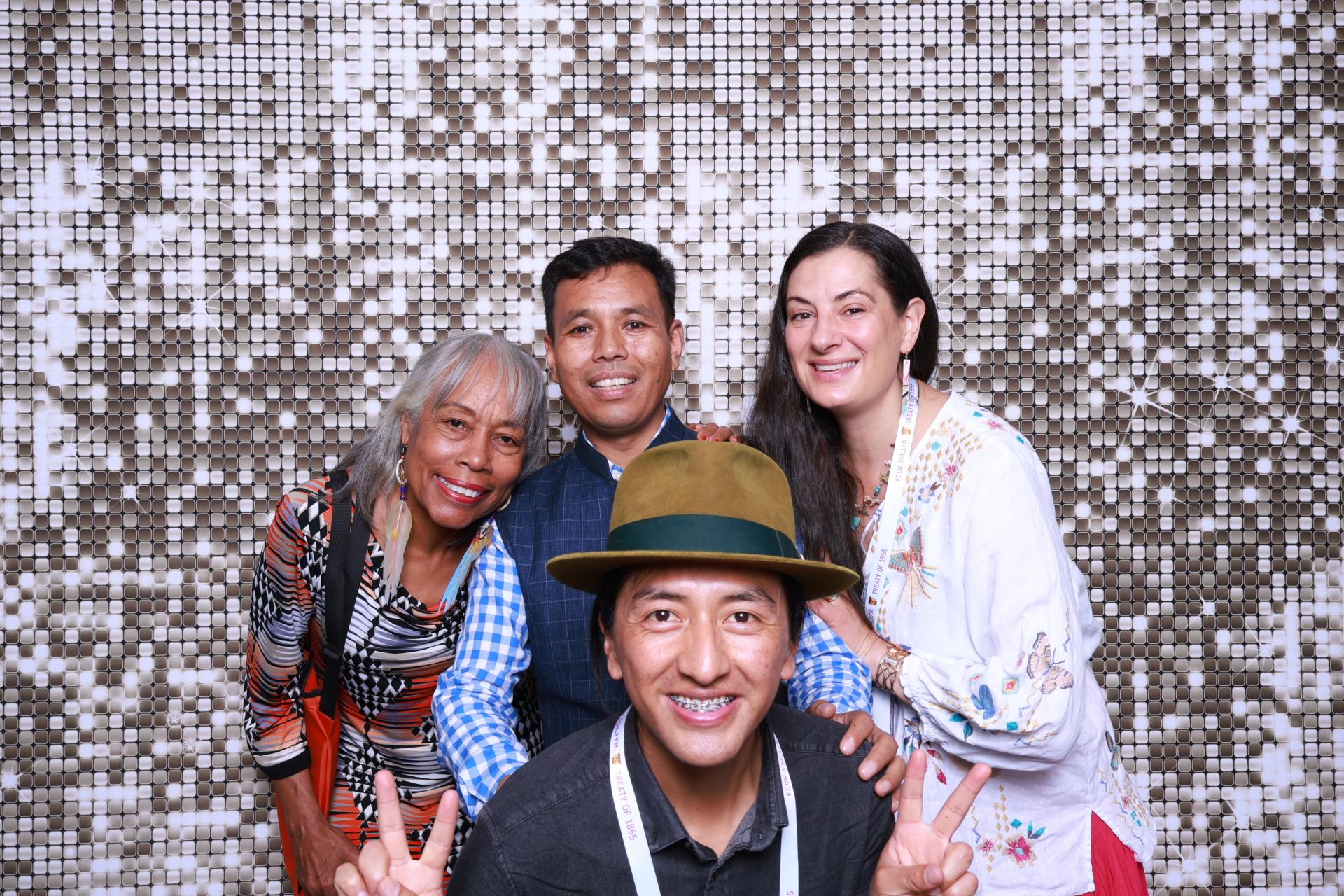
Cultural Survival was a proud sponsor of the 2026 Indigenous Media Conference in Portland, Oregon, organized by IJA. Led by Aimee Roberson (Choctaw and Chickasaw), Executive Director, Cultural Survival’s delegation included Edison Andrango (Kichwa Otavalo), Indigenous Rights Radio Program Assistant; Dev Kumar Sunuwar (Koĩts-Sunuwar), Community Media Program Coordinator; and Phoebe Farris, Ph.D. (Powhatan-Renape), Contributing Arts Editor.
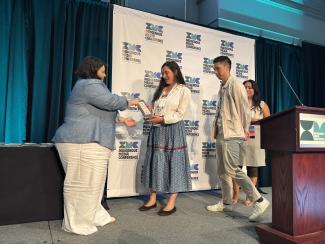
Top photo: Aimee Roberson (Choctaw and Chickasaw), Cultural Survival Executive Director, receiving recognition for sponsorship of the conference.