
Strategic Blindness at UNGA 81: “Super Intelligence” and “Killer Robots” Take Center Stage as Women’s Rights Take a Back Seat
 29 September 2026
Credit: United Nations
By Shihana Mohamed
NEW YORK, Sep 29 2026 (IPS)
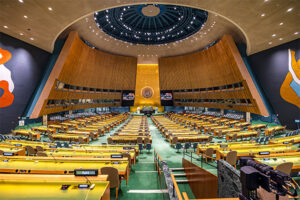
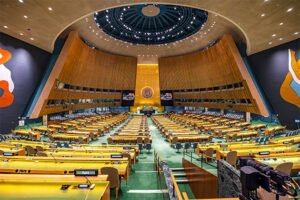
“Artificial intelligence (AI) must be shaped by humanity, with humanity, and for all humanity… Life-and-death decisions must never be surrendered to machines. Killer robots must have no place in our future.”
With those words, United Nations Secretary-General António Guterres opened the high-level debate of the 81st session of the General Assembly (UNGA 81). He also warned: “Women and girls continue to face discrimination, violence, exclusion and abuse… Their rights are being rolled back. Their voices silenced. Their bodies turned into battlegrounds.”
Both technological transformation and the erosion of women’s rights were placed before the world, yet the political response to each was markedly different.
Opening speeches focused heavily on technology. French President Emmanuel Macron warned that a few powers could decide the planet’s future through AI and urged states to build independent, open-source models; UK Prime Minister Andy Burnham called for global cooperation on transparency and ethics; China’s Vice President Han Zheng stressed a people-centered approach to narrowing the digital divide; and Russia’s Foreign Minister Sergey Lavrov called for the UN to lead AI rule-setting through equal participation.
U.S. President Donald Trump focused on U.S. technological leadership. He declared that the United States was outcompeting the world and called for a change in terminology: “From this point forward, all U.S. documents—and hopefully the world—will use the more accurate term super rather than artificial. So, it’s super intelligence.”
Shihana Mohamed
Disparity is also reflected in the numbers. By Saturday, September 26, 2026, 86 of the 174 speakers had raised technology and AI, compared with 46 who raised human rights and gender.
The question is unavoidable: why has the international system shown such urgency in governing emerging technologies while allowing the erosion of women’s rights to remain a secondary concern?
Twin Transformations
The 81st session convened under the theme, “Restoring trust, managing transformation: a United Nations that delivers for all.” That theme highlights two defining transformations: the rapid expansion of generative AI and the growing political backlash against the rights of women and girls.
The United Nations treats both as critical to achieving the 2030 Sustainable Development Goals, yet world leaders are not giving them equal political weight. AI is being elevated as an urgent global governance challenge, while gender equality is increasingly treated as a goal that can wait.
That is a dangerous disconnect.
AI is already reshaping economies, labour markets and public life. It will influence who gets opportunities, whose work is automated, and whose voices are represented in the systems that increasingly influence daily life.
Declining Gender Momentum
AI has ascended to the top tier of global political concerns. Leaders are focused on governance, innovation, digital sovereignty, security, and technological competition.
Meanwhile, the momentum on gender equality is moving in the opposite direction. UN Women and UN DESA report that one in three institutional mechanisms for gender equality has lost institutional power over the past two years. Around one in four have seen their operating budgets cut, while nearly one in ten have lost control of their budgets altogether.
Globally, progress on women’s political and executive participation is reversing. At the current rate of progress, the report projects that global gender equality could be achieved only by 2197, far beyond the UN’s 2030 target.
There is a basic leadership question that Member States have yet to answer: Why has no woman ever been selected as Secretary-General of the United Nations?
The problem is not a shortage of promises but the widening gap between rhetoric and political action.
The Funding Disparity
The resource gap makes that contrast tangible.
Global venture-capital investment in AI firms reached $258.7 billion in 2025, accounting for 61% of total global VC investment, according to the OECD. Philanthropic investment is also growing, including the Gates Foundation’s September 2026 commitment to spend at least $1 billion over two years on equitable access to AI and AI-enabled solutions.
Funding for women’s rights is contracting.
Funding for gender equality fell 13% between 2023 and 2024, while funding for women’s rights organizations declined by 28% over the same period.
This is not merely a funding problem; it reflects what the international community considers urgent.
The world is mobilizing enormous capital to build the technologies that will define the future while reducing resources for the organizations working to ensure that women have an equal place in it.
Women Left Behind in the AI Economy
The gender gap is already visible inside the AI economy.
UN Women’s 2026 Gender Snapshot reports that women account for around 22% of AI professionals globally and fewer than 14% of senior leadership positions, based on an analysis of nearly 1.6 million AI professionals.
Women are around 20% less likely than men to use generative AI tools. The result is a persistent gap in both the development and adoption of AI—and a fundamental question about whose perspectives are shaping the future of work.
The International Labour Organization finds that female-dominated occupations are almost twice as likely to be exposed to generative AI as male-dominated occupations—29% compared with 16%. Women’s concentration in clerical, administrative, and business-support roles, where many tasks are routine and codifiable, contributes significantly to this disparity.
AI is intensifying digital violence against women in public life. UN Women reports increasing use of AI-generated deepfakes, manipulated images and coordinated online harassment against women in public-facing roles. Such abuse can intimidate women and undermine their participation in public life.
UN Women estimates that 90–95% of online deepfakes are non-consensual pornographic images, with around 90% depicting women.
This is where the two crises converge. The same technology being celebrated as transformative is also being used to threaten women’s economic security, public participation, and personal safety.
Immediate Mandates for AI and Gender Equality
More than three decades after the 1995 Beijing Declaration and Platform for Action set a global framework for gender equality, the world remains far from its commitments.
The General Assembly must move beyond another cycle of declarations and voluntary targets and act where technology, funding and gender rights now intersect.
- • Enforce Financial Reciprocity via a Global Tech Solidarity Fund: The General Assembly should establish a mechanism requiring a fixed share of global digital-transformation investment to support grassroots women’s organizations, and strengthen their technical capacity, infrastructure and advocacy.
• Establish an International Enforcement Mechanism with the Urgency Applied to AI: The UN should address the erosion of women’s rights with the same urgency applied to emerging technological threats. The General Assembly should establish a global monitoring mechanism empowered to impose diplomatic and financial consequences on states that roll back women’s legal protections.
• Criminalize Technology-Facilitated Abuse and Mandate Safety-by-Design: The General Assembly should advance a binding international treaty classifying AI-generated deepfakes weaponized against women in public life as violations of international human rights law. Technology companies should be required to address algorithmic bias and security failures that endanger women’s participation in public life.
If world leaders truly intend to “manage transformation” and “restore trust,” they cannot continue treating women’s empowerment as a secondary issue.
The willingness to govern the digital frontier must extend to protecting the women who live and work within it.
Otherwise, the “super intelligence” that leaders celebrate will not simply become an engine of economic growth. It could also become a powerful tool for reinforcing the structural exclusion of half the human race.
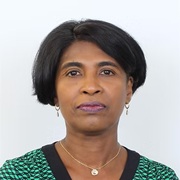
Shihana Mohamed is the President of Asia Global Forum (www.AsiaGlobalForum.org) and a US Public Voices Fellow on advancing the rights of women and girls. She is the founder of the UN Asia Network for Diversity & Inclusion (www.UN-ANDI.org) and a dedicated human rights activist and a strong advocate for gender equality and the advancement of women.
IPS UN Bureau