
Taliban Use Dress Code to Justify Arbitrary Arrests of Women
 16 Juli 2026
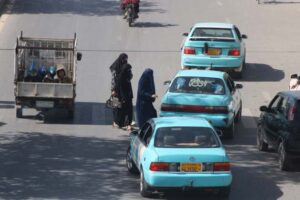
“It is no longer clear what is allowed and what is not. Uncertainty keeps people in their homes. The city has fallen silent, and businesses are struggling.” Credit: Learning Together.
By External Source
HERAT, Afghanistan, Jul 16 2026 (IPS)
One morning in June, Halima (name changed), went to the market in Herat, her hometown in western Afghanistan, with her mother. She was wearing a long coat and a surgical mask covering her face. She could not have imagined that just a few minutes later she would be sitting in prison.
Vehicles from the Ministry of the Promotion of Virtue and Prevention of Vice, or morality police, arrived at the market right after Halima and her mother. According to Halima, female employees of the ministry began arresting women without asking any questions. Cars waiting nearby took the detainees away.
“Everything happened quickly. Some tried to escape, while others were terrified. We did not understand on what basis the Taliban selected those to be arrested.”
Halima says that some of the women arrested were wearing burqas that covered both their faces and bodies. Like Halima, some were wearing long coats and face masks. Still, the morality police seized her.
“My mother cried and begged them not to take me. She was threatened with a one-month prison term, along with corporal punishment and a fine, if she tried to prevent my arrest. No one dared to come and help, even though my mother yelled.”
Women were being arrested, kicked and beaten, humiliated and mocked. Taliban troops stood by their SUVs, watching as their female colleagues grabbed the women. They grabbed those whose clothing did not conform to the Taliban’s concept of dress code
The phones of the arrested girls and women were confiscated. There were about 30 of them, and all were taken to a so-called shelter run by the Department of Labor and Social Affairs. It houses both single women and newly arrested women. None of them were allowed to contact their families. The next morning they were transferred to a prison.
The women’s wing of the prison was dirty and poorly equipped. Fear and uncertainty filled the minds of every prisoner.
“I sat in a corner and looked at my fellow prisoners: young girls, middle-aged women, and mothers who were worried about their children. There were about 60 of us. Everyone was either wearing a burqa or wearing what I thought was appropriate clothing. Yet, each of us was imprisoned because we supposedly did not follow the dress code,” says Halima.
The next day she was released. At home, her mother hugged her and they both cried. Halima was told that her father had paid 16,000 Afghanis (about 220 euros) for his daughter’s release. In addition, the family had to sign a guarantee that none of the women in the family would go out again without proper clothing.
After returning home, nothing felt the same. Halima’s brothers were furious and claimed that she had tarnished the family’s honor by going to prison.
“As if I had committed a crime! But I still believe that I did nothing wrong,” she says.
“Fear has become a part of my life. I will never forget those two nights in prison. I kept wondering whether all my fellow prisoners had been released and whether others had been arrested after us. I wondered what would happen to the women and girls of this country,” says Halima.
“I can’t go out like I used to. I’m always afraid when I leave home. I keep thinking about what will happen if I’m arrested again.”
Halima is not alone in her experiences. The Taliban have recently begun enforcing the dress code for women in Herat more strictly.
In early June, mosques in the city announced stricter regulations, and reports of the arrests of women and girls across the city began spreading on social media. The arrests have raised concerns, sparked protests and heightened security across the province.
According to the UN, at least 30 women were arrested in Herat over the first weekend of June.
Suhaila (name changed) remembers the moment when anger and powerlessness led many in Herat to protest.
The day before the protests, Suhaila went shopping at the market. Earlier that day, the imam of the local mosque had announced a new Taliban order: women who violated the dress code would be arrested and imprisoned without the possibility of appeal.
Suhaila’s father believed that the threats from the authorities should be taken seriously and that her daughter should not go out without full-body clothing. Suhaila followed her father’s advice and dressed as instructed, but still experienced something at the market that she will never forget.
“As soon as I arrived at the market, I sensed an unusual atmosphere of confusion. Women were moving restlessly from one side of the market to the other, and many were trying to do their shopping and leave as quickly as possible.”
Then it started happening. Women were being arrested, kicked and beaten, humiliated and mocked. Taliban troops stood by their SUVs, watching as their female colleagues grabbed the women. They grabbed those whose clothing did not conform to the Taliban’s concept of dress code.
“I wanted to scream and protest, but I was at the market with my little sister. I held her tightly to me and just cried. I was afraid that if I opened my mouth, they would take us, too.”
Zainab did not escape.
That evening, Suhaila joined a WhatsApp group for young people in her neighborhood, where they discussed what had happened. The group had dozens of messages about the arrests. Some shared photos and stories of what had happened, while others shared personal experiences of family members.
Soon, the group began dicussing the possibility of organizing a protest. Some warned that protesting would lead to more arrests and perhaps even deaths. Others believed that remaining silent in the face of injustice would rob people of their self-respect.
Suhaila decided to join the protests. She wanted to give a voice to the girls and women whose arrests she had witnessed. In the morning, she left for the agreed-upon meeting point without telling her father about her plans and despite her mother’s objections. The protesters began chanting slogans demanding women’s rights to education, work, and freedom.
The protest grew quickly but did not last long. Suddenly, Taliban SUVs approached the crowd from several directions and surrounded it. The protesters were beaten, and the Taliban opened fire. Desperate screams could be heard everywhere, and people looked for shelter wherever they could. Some were injured, while others tried to help them.
Among those arrested were also Suhaila’s friends.
“Zainab did not escape. The last time I saw her was when she was forced into a Taliban car. No one has heard from her since,” Suhaila says.
“We do not feel safe even in our homes. The Taliban are going from street to street looking for protesters,” Suhaila says of the atmosphere after the protests.
Fear is everywhere. Women no longer want to go to the market, and many families leave their homes only when forced to.
It is no longer clear what is allowed and what is not. Uncertainty keeps people in their homes. The city has fallen silent and businesses are struggling.
Shakoor (name changed) believes that it is not just a question of women’s clothing.
“Girls and women have a special status in this city. Arresting a woman or publicly humiliating her is considered an attack on the dignity and honor of the family. That is why the reaction has been so strong, and this time men have also demonstrated.”
The local Taliban administration believes that tightening the dress code for women protects social values.
Governor Noor Ahmad Islamjar believes the protests are the result of misunderstandings and outside influence. In a television interview, he reminded the public that demonstrations are not allowed.
The Taliban regime says the women arrested will be released after receiving a warning, their families will be notified, and they will be required to sign a pledge to follow the dress code. However, not all families know what has happened to their loved ones.
One of them is Suhaila’s friend, Zainab. Her family has not heard from her since her arrest.