U.S.-Iran War Escalates Amid Growing Fears of Regional Instability and Rises In Arbitrary Executions
 4 Agustus 2026
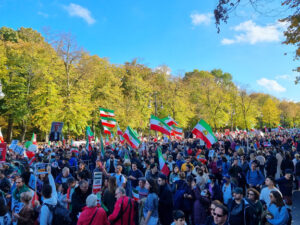
IInternational experts have reported a uptick of human rights violations committed in Iran, notably arbitrary executions of protestors since January 2026. Credit: Amir Sarabadani/Wikimedia Commons
By Oritro Karim
UNITED NATIONS, Aug 3 2026 (IPS)
Over the past several weeks, the humanitarian landscape in the Middle East has deteriorated significantly, exacerbated by escalating security concerns and serious human rights violations. In late July, the United Nations (UN) highlighted a sharp uptick in hostilities between the United States and Iran, alongside growing concerns over wider regional instability.
On July 30, the Office for the Coordination of Humanitarian Affairs (OCHA) warned that the “humanitarian consequences of the Middle East escalation are worsening by the day.” The conflict between the United States and Iran has grown increasingly volatile over recent months, with both parties intermittently resuming bombardment following the breakdown of the April ceasefire.
On July 28, Iranian forces attempted a series of ballistic missile attacks targeting U.S. bases in Jordan and vessels in the Strait of Hormuz. This prompted an immediate military response from the U.S. military, with defense officials confirming that it had completed a “heavy wave” of airstrikes targeting numerous bases affiliated with Iran’s Islamic Revolutionary Guard Corps (IRGC).
This recent wave of airstrikes in Iran affected numerous provinces—including Hormozgan, Bushehr, Fars, and Khuzestan—notably impacting the country’s primary oil-producing region. According to the Iranian Ministry of Health, at least 60 civilian deaths and 670 injuries have been recorded over the past month alone. On July 30, a strike in Qeshm in Hormozgan province hit a residential building, killing three civilians, including a two-year-old child.
This conflict has severely disrupted global shipping and oil production, driving a considerable increase in domestic gasoline prices in the U.S. and compounding Iran’s economic collapse. On July 29, United Nations Secretary-General António Guterres expressed concern about the risk of a broader regional conflict if effective diplomacy is not established soon.
Deputy Spokesperson for the Secretary-General, Farhan Haq, told reporters that current developments are “not positive”, noting that Guterres is hoping for an immediate cessation of hostilities. “The Secretary-General has been worried for some time that if the parties do not return to negotiations, you could have a widening of the conflict, and that seems to be what has been happening in recent hours,” said Haq at a press briefing at the UN Headquarters.
“These are not positive developments, and he wants to make sure that the parties can cease fighting and again return to the diplomatic efforts, including the mediation efforts being pressed forward by Pakistan, Qatar and others…Having more parties involved in the fighting, having the fighting spread to a larger number of countries, all of these are adverse developments and could get us into a much worse situation even than before.”
Following discussions with regional allies, U.S. President Donald Trump told reporters on August 1 that he had halted planned military strikes against Iran as negotiations toward a de-escalation of hostilities are scheduled to pick up on August 3. Contingent on both sides “rapidly” securing a deal, Trump told reporters that these plans include frameworks for the reopening of the Strait of Hormuz, which would allow for the immediate decongestion of stalled global cargo traffic and the resumption of commercial oil shipments.
In response, Iranian officials confirmed that Tehran did not ask the U.S. to halt these strikes, stating that Iran remains “on high alert and ready for any eventuality.” As of August 3, no new negotiations were held between the U.S. and Iran. Esmail Baghaie, the spokesperson for Iran’s foreign ministry, has said that there are no plans to send an Iranian delegation, nor to receive any delegations, however diplomatic engagement is ongoing.
Although the Strait of Hormuz is currently closed, Jordan and Egypt remain critical lifelines for humanitarian aid deliveries and medical evacuations for struggling Iranian communities.
Furthermore, Iran continues to grapple with a sharp rise in human rights violations recorded over the course of 2026. Since March 19, the Center for Human Rights in Iran recorded the executions of at least 46 civilians on politically motivated charges. Reflecting a considerable surge in the use of the death penalty to repress civilian dissent, at least 23 of those convicted were protestors arrested during the protests in January.
On July 23, the UN Independent International Fact-Finding Mission on Iran urged Iranian authorities to halt all executions and establish frameworks on the use of the death penalty in accordance with international humanitarian law. The Mission condemned the arbitrary executions of two young protestors, 18-year old Erfan Esfandiari and 23-year old Mohammad Mohammadi on July 19.
In the wake of these executions, Iranian authorities proceeded to publicly execute protestors Amir Hossein Safari and Abolfazl Sepahi following what Amnesty International described as a “grossly unfair mass trail involving dozens of defendants.” Ten additional Iranian men now face an imminent threat of arbitrary execution over their involvement in the January demonstrations, with the Mission calling for an immediate halt to these executions.
“The Iranian authorities are unleashing a horrifying wave of executions and death sentences to punish and suppress dissent and project an image of strength and absolute control in the wake of the January popular uprising and amid ongoing attacks by US and Israeli forces,” said Heba Morayef, Regional Director for the Middle East and North Africa at Amnesty International.
“The muted response from the international community emboldens the Iranian authorities to continue their deadly rampage. UN member states must take urgent coordinated diplomatic action to press the Iranian authorities to halt further executions. They must place Iran’s human rights and impunity crisis high on their agenda, support the creation of an independent international justice mechanism for Iran and urge the UN Security Council to refer the situation in Iran to the International Criminal Court.”
IPS UN Bureau Report