Ukrainian Groups Urge WHO to Act on Torture of Captives by Russian Medical Staff
 7 Oktober 2026
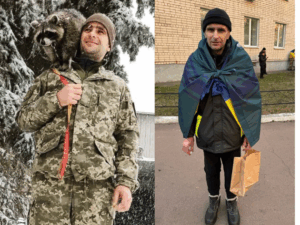
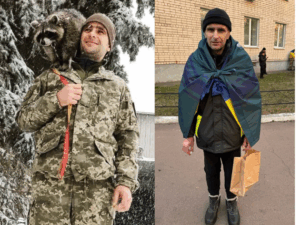
The effects of torture and ill-treatment seen on Oleksandr Savov, a Ukrainian marine who took part in the defence of Mariupol after his release from Russian captivity. Credit: Anastasiia Savova
By Ed Holt
BRATISLAVA, Oct 7 2026 (IPS)
More than 60 Ukrainian organisations have issued an appeal to the World Health Organisation (WHO) to help stop the torture of Ukrainians held in Russian captivity.
Ahead of International Doctors’ Day on October 5, the groups, including the Nobel Peace Prize-winning organisation the Centre for Civil Liberties (CCL), issued an appeal to the WHO, calling on it to draw international attention to systematic violations of the right to medical care for Ukrainian prisoners of war (POWs) and civilians illegally detained by Russian forces.
The appeal follows the release of a report, ‘Anatomy of Torture: Testimonies on Torture and Ill-Treatment by Medical Personnel in Russian Captivity’, by Ukrainian NGOs, including testimonies from released POWs and illegally detained civilians, which its authors say points to, among others, the systemic denial of medical care to detainees and the direct participation of medical staff in their torture and ill-treatment. In some cases this has resulted in the deaths of POWs and detained civilians.
The groups behind the appeal believe it will increase public awareness of the treatment of detained Ukrainians and put pressure on international organisations to take concrete action to stop it.
“It is important to draw attention to the fact that the denial of medical care and the involvement of medical personnel in cruel treatment are not isolated incidents but form a systemic problem. We expect international organisations not only to respond with statements but also to take concrete action,” Nataliia Yashchuk, Senior War Consequences Officer at CCL, which co-produced the Anatomy of Torture report, told IPS.
Since the start of Russia’s full-scale invasion more than four and a half years ago, there have been repeated reports of ill-treatment of POWs and civilians held in Russian detention facilities, including some that allege war crimes and crimes against humanity committed against detainees.
But the Anatomy of Torture report documents specifically how Ukrainians held in Russian penal institutes have been, and continue to be, victims of torture by medical staff.
Yashchuk told IPS that the group’s systematic analysis of dozens of testimonies demonstrated that these were not isolated incidents but instead a recurring pattern of behaviour by medical personnel in different detention centres, suggesting it was a systematic practice.
This is backed up by the fact that some of those who provided testimonies for the report were doctors and medics themselves and therefore especially qualified to identify the deliberate and systematic nature of the ill-treatment they suffered, its authors say.
“Our objective [with the report] was…to demonstrate the systemic nature of the problem,” Yashchuk said.
The report includes testimony from former Ukrainian prisoners of war (POWs) who were subjected to torture by doctors and nurses at facilities – CCL estimates there are up to 300 locations where Ukrainians are being held – across Russian-occupied territories and Russia itself.
The abuse included not just denial of healthcare but also beatings, electric shocks, death threats from medical staff, and being forced to stand in one spot for 16 hours and being made to beg for help before being tortured again.
Sergii Doroshenko, a former paediatrician who was serving as head of an army medical unit when he was captured by Russian forces in Mariupol in spring 2022, spent 1030 days in captivity at various detention centres across Russia.
He told IPS he was held in inhumane conditions in detention centres where medical supplies or personnel were sometimes non-existent, and any request for medical help was met with refusal. At others he and any other medical personnel detained were allowed to help their own wounded, but only using whatever they could scavenge themselves, such as any bandages, tourniquets, or other materials they happened to have.
Doroshenko said that in one penal facility where only unpurified water was available to prisoners, 800 people had intestinal illnesses at the same time. He and others used stripped bark from prison grounds, which they then brewed into a drink to slow down or curb such outbreaks.
“There were episodes when people lost consciousness from dehydration and received no treatment, because there were no medicines at all,” he said.
He also describes how at another detention centre when he and others sought medical help, “instead of pills, we were treated with electric shocks …it was the treatment for everything — for toothache, for injuries from beatings, for joint pain, for fever, for coughing.”
Meanwhile, in some cases medical personnel actively participated in torture.
He said his worst experience was during his last year of captivity when he was sent to a correctional colony in the Republic of Mordovia in the Russian Federation.
“There, the doctor personally took part in the torture and was perhaps the cruellest of all the staff at that colony,” said Doroshenko. He was nicknamed “Doctor Death” because after his torture sessions, several people had to undergo surgical operations.
“There was also the deliberate withholding of medical care by medical staff. Even when they saw that we had temperatures of 39–40°C, when people had a fever and fell into a kind of intermediate state between consciousness and unconsciousness, even then, they did not permit any treatment, not even a rest from the torture.
“For example, from my own experience, I had a very high fever, and for about four or five days I sought help daily, and in response received beatings and electric shocks, but my condition was so bad that a rash covered my entire body, from my face to my heels, and afterward I had peeling, shedding skin… I never received a single pill, not a single antipyretic treatment — nothing but beatings,” said Doroshenko.
He added that Russian propaganda intentionally demonised medics, which made prisoners like him a special target for torture.
Meanwhile, his presence in captivity was officially confirmed only two and a half years after his capture. Groups like Amnesty International have pointed out that POWs have been deliberately cut off from the outside world, often for years, and a lack of transparency over their whereabouts has allowed for their torture and even unlawful killings to continue with total impunity.
“The Russian Federation only officially confirmed my presence in captivity after two and a half years. Before that, they did not officially acknowledge that I was their prisoner, meaning that if I had been killed or tortured to death somewhere, they would bear no responsibility for it,” said Doroshenko.
“Only about six months before my release did they confirm that they indeed held a certain Sergii Doroshenko in captivity, and thereafter, the frequency of torture decreased significantly, the beatings decreased significantly — they started, so to speak, to take a bit of care of us, fearing that we might die from the torture,” he added.
Other groups have also documented incidents of torture of Ukrainians by Russian medical staff.
A report released late last year by Human Rights Watch (HRW) suggested medical personnel enabled or were apparently complicit in torture, staff at the group told IPS.
Yulia Gorbunova, associate director for Ukraine at HRW, told IPS that the report’s findings and ongoing monitoring showed incidents of Ukrainian POWs being denied basic treatment and pain management at detention facilities in Russia and Russia-occupied areas of Ukraine despite suffering from severe combat wounds or after being injured during interrogations.
“From the moment of capture and throughout their detention, former POWs described medical care at every stage as inadequate, often abusive, and routinely withheld or delayed. Treatment for combat wounds, torture injuries, or contagious diseases like tuberculosis and scabies was typically restricted to basic antiseptics or mild painkillers.
“In addition, these facilities are operated under conditions that actively degrade physical health. Ukrainian detainees (POWs and civilians) endure severe overcrowding, chronic starvation, unsanitary conditions, and a lack of clean water, leading to rapid physical deterioration and untreated health issues,” she said.
Another recent report by Ukrainian NGOs included similar findings.
Russian authorities have repeatedly denied that any Ukrainian POWs or civilians it holds are subject to ill treatment or torture.
However, reporting from the Office of the United Nations High Commissioner for Human Rights (OHCHR) and the Independent International Commission of Inquiry on Ukraine, among others, has shown that Russia has consistently refused to grant independent monitors access to POW detention sites.
This means that there are no official records of injuries and illnesses resulting from the ill-treatment and torture of detainees.
The Anatomy of Torture report includes an analysis documenting how the reported treatment of detainees by Russian medical staff is a violation of not just international rights treaties such as the Geneva Conventions but also the World Medical Association’s International Code of Medical Ethics.
When IPS contacted them, WHO officials were not available to speak about the Ukrainian organisations’ appeal.
A spokesperson for the ICRC did not comment on the specific allegations in the Anatomy of Torture report but said the group was “concerned by any reports of ill-treatment of those in captivity or detention.”
“Under international humanitarian law, all people deprived of liberty, be they combatants or civilians, must be treated humanely. Care for their life, dignity and wellbeing is paramount. The 1949 Geneva Conventions contain specific rules governing conditions of detention, including access to proper hygiene standards and medical care and treatment. In all cases, the provision of medical care must comply with the applicable standards of medical ethics,” the spokesperson said.
Meanwhile, some victims of the torture and ill-treatment recorded in the report are speaking out to help bring those responsible to justice.
When Oleksandr Savov, a Ukrainian marine who took part in the defence of Mariupol, returned to his family after almost three years in various Russian detention centres, his daughter, Anastasiia, was glad to be reunited with her father but shocked at his physical state. She knew from his almost skeletal frame that he had suffered while in captivity.
She told IPS that when he had been captured, he had no injuries nor illnesses. But when he was released, he had tuberculosis, broken ribs, chronic ulcers, and lymphoedema. He was unable to straighten one leg and doctors told him he would need a knee replacement.
He also had mental health problems, including night terrors, panic attacks during air raids, and a paralyzing fear of silence or queues.
After seeing doctors and realising the full extent of his injuries he began to think about what had happened to him and fellow captives and the fact that it was medical staff who had inflicted such suffering.
“He couldn’t understand how doctors could be so cruel to other people,” Anastasiia said.
He told her what they had done to him, including not just refusing to provide medical care when he needed it, but torture with electric shocks.
Savov died of heart failure in November last year, eight months after he was released. He was 46. After his death, doctors in Ukraine found that his heart had been damaged following a heart attack he had suffered in captivity.
He spent his final months visiting hospitals and documenting his memories in a notebook for the International Criminal Court (ICC).
Anastasiia has since founded a community for the families of captive marines and continues to speak out in support of detained defenders and returning soldiers. She has also filed a complaint with the ICC over her father’s torture.
She says that, like her father, she believes that speaking out publicly forces Russia to ease conditions for those still detained.
She also says that she wants to see the people who tortured her father and others brought before a court and held accountable for their actions.
“These medical staff are part of a system of torture in these prisons because when people ask for medical help, for instance, like when my father did, they come, and they just laughed in their faces and recorded videos of them on their phones instead of helping them,” she said.
She added it is imperative investigations into these people take place, or “this torture and ill treatment won’t end.”
This was also her father’s wish before he died.
“After he was released from captivity, my father did a lot of interviews with journalists and human rights defenders, and once he was asked whether he felt anger towards the people who had tortured him. He said that at that moment, he felt nothing about them, but he wanted the torture to stop. The thought that those kinds of things were going on at the same time he was talking to those journalists really upset him. He couldn’t understand why there was no one in the whole world who could do anything about it,” she says.
Doroshenko said people involved in the torture of Ukrainian detainees should face “something like the Nuremberg trials”.
“The conduct of the doctors, the medical staff, and even ordinary guards at these penal facilities was a deliberate violation of the Geneva Convention and a deliberate use of torture, and therefore they should be subject, as war criminals, to judicial investigation and, following that, judicial punishment in accordance with the court’s decision. These are people who have lost their humanity, who have become beasts, and who have no right to be in society. A doctor has no right to torture others,” he said.
Some doctors allegedly involved in torture of Ukrainian captives have already been identified, and earlier this year the EU sanctioned Galina Mokshanova, the head of the medical unit of Penal Colony No. 10 in Udarny, Russia, for human rights violations.
Ensuring justice and accountability is vital not just for victims and their relatives, Yashchuk said.
“This research is about documenting crimes but also the urgent need for effective international mechanisms capable of saving the lives of those who remain in captivity,” she said.
IPS UN Bureau Report