
Will Bangladesh’s Islamists Reconcile with the Nation’s Cultural Identity?
 25 November 2026
Ex cultu robur: from culture comes strength
By Saifullah Syed
DHAKA, Bangladesh, Nov 25 2026 (IPS)
Bangladesh has now been let down by two governments in a row. Sixteen years of Awami League rule ended in corruption and authoritarianism, and the BNP, returned to power, is behaving much as its predecessor did. The Islamist party presents itself as the clean alternative, yet many voters fear its views on women and its opposition to parts of Bengali culture. This essay argues that Bangladesh’s strength has always lain in its culture, ex cultu robur, and that the Islamist party’s future depends on whether it can make peace with that inheritance.

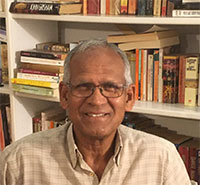
Saifullah Syed
Growth and Decay
Bangladesh’s early years brought political upheaval, violence and brutal military coups. Stability returned only in 1991, when an elected government took power. Since then, building on policy reforms and infrastructure projects begun under the earlier military regimes, and working with the international community, the country has made real economic progress. It drew global attention for lifting itself out of poverty through economic growth and agricultural development, and was poised to leave the least developed country (LDC) category in 2026. Graduation has since been pushed back to 2029 at the government’s request.
But this success came with a deluge of corruption and a rot in the moral fabric of government. Sheikh Hasina, daughter of the “Father of the Nation” and head of the Awami League (AL), the party that brought the country its independence, won a landslide victory in the 2008 election and again in 2014, 2018 and 2024. Those later elections were widely criticised: opposition parties boycotted them, and international observers alleged vote manipulation and suppression. Her premiership ended in August 2024 with the July–August uprising, closing sixteen years of uninterrupted authoritarian rule.
Behind its showcase of achievements, the AL government was systematically looting the country through corrupt practices, crony capitalism and outright theft from the banking system. The White Paper on the State of the Bangladesh Economy, prepared by a Committee of Experts appointed by the Interim Government, documents the scale. Between 2009 and 2023, illicit financial outflows averaged $16 billion a year, more than double the combined value of net foreign aid and FDI inflows.
The ruling elite treated power as a source of income and a means of establishing their families abroad. The government’s development agenda shifted from building prosperity for the people to maximising earnings, laundering them overseas, and buying property and a comfortable life in the West. Corruption stifled job creation, and for many young people migration, even at the risk of death, became the most promising option.
The Uprising and the Interim Government
The students rebelled and overthrew the government. They demanded a ban on the Awami League’s political role and activities, and installed an Interim Government headed by Professor Muhammad Yunus, the country’s most distinguished Nobel laureate. Everyone sighed with relief and hoped for a better future under his guidance.
His reforms, however, did not win broad support from the political parties, which demanded a government elected by the people. The Bangladesh Nationalist Party (BNP), the main opposition party, recognised that the Awami League would not be allowed to contest the coming election and pressed for an immediate vote. Reforms, it argued, should be carried out by an elected government, not by one without a political mandate. Faced with this opposition, and aware that an elected government would reject reforms the main parties did not support, the Interim Government proceeded to organise the election.
Two contenders led the field: the BNP, headed by the son of its former leaders, and the Islamist party. The BNP had been accused of crime, extortion and corruption when it was last in power. Although the party was cleared under the Interim Government, those accusations, together with the extortion and corruption of BNP cadres, still linger in the public mind. The Islamist party was touted as one that could provide good governance and fight corruption, but people were uneasy about its views on women and its opposition to some Bengali social and cultural values. Despite these misgivings, the BNP won. The Islamist party came second and became the main opposition, while the new National Citizen Party (NCP), formed by the rebellious students, won a handful of seats.
The Election and Its Aftermath
After coming to power, the BNP began functioning like the Awami League government before it. Hardly a day goes by without reports of illicit land grabbing, police harassment of ordinary people, and bribery and extortion in government offices, on the streets, and in markets and transport hubs. The law and order situation and the level of corruption are worse than ever before. People have come to realise that both parties are corrupt from the grassroots to the top, and that in corruption their relationship is almost incestuous, with both intertwined with the judiciary and the bureaucracy.
The economy offers little comfort. Real GDP growth has fallen from 5.8 per cent in FY23 to 4.2 per cent in FY24 and 3.5 per cent in FY25, and is about 3.4–3.6 per cent in FY26 (World Bank and IMF). Agriculture and remittances are the bright spots. The agricultural sector grew by a provisional 2.78 per cent in FY26 (2025–26), up slightly from 2.42 per cent in FY25, and remittances rose by 17 per cent to about $35.6 billion.
The country is on the verge of erupting into political violence again, and the choices facing it are a military takeover or the Islamist party. A takeover is no real solution but a temporary relief, bound to end with power handed back to a civilian government. The Islamist party, though unproven and untested in power, is emerging as the ultimate hope of escape from the corruption and extortion practised by the Awami League and the current BNP government. What holds it back is the unease already described: its views on women and its opposition to some Bengali social and cultural values.
Religion and Nationhood
Many argue that religion was the seed from which Bangladesh grew. In the early 1900s, Bengal’s Muslims concluded that they could not live as equals with Hindus and prosper as a community. Their leaders therefore rallied behind the partition of Bengal into two provinces along religious lines, carried out in 1905 by Lord Curzon, the British Viceroy of India. The new Muslim-majority province, with Dhaka as its capital, offered educational, economic and political advancement free from the dominance of the Hindus based in Calcutta. The All India Muslim League was founded in Dhaka in 1906 to protect the partition and its opportunities, and Bengali Muslim writers began forging a distinct modern literary voice to express their community’s social and political identity.
The Muslim League ultimately led to the creation of Pakistan in 1947, in two parts. East Pakistan is present-day Bangladesh, which includes the capital and nearly 50 per cent of the area of the East Bengal of 1906. West Pakistan is present-day Pakistan, on the western side of India, 1,200 km away. A country founded on religion fell apart in less than 25 years. East Pakistan had nothing in common with West Pakistan except religion, and religion proved insufficient to hold them together. West Bengal is the mirror image: Bangladesh has everything in common with it except religion, yet the two cannot be united.
There are many Muslim-majority countries in the world, and though they share a religion, each is different. Every people has its own identity, dress, food, culture and social values, shaped by its own history and civilisation. The Islamist party therefore needs to define what a “Bengali Muslim” identity means. Bengali Muslims are Bengali by ethnicity, which is not a choice. Most Bangladeshis are also Muslims by religion, which cannot be denied but is a choice. It is in this context that Bangladesh’s culture and history come into play.
Ex Cultu Robur: Language as the Foundation of Sovereignty
Countries trace their origins to a mix of legal milestones, cultural heritage and historical narrative, and most rely on more than one “starting point”, depending on whether they speak of their modern government or their ancient roots. Those with millennia of continuous settlement often anchor their identity in empires or kingdoms that long predate their modern borders.
Pakistan, East and West, traced its origin to religion, and religion could not keep it united. Bangladesh traces its origin to a language. That is why the Latin motto ex cultu robur, “from culture comes strength”, suits the country so well. Its sovereignty, its resilience and its place in the world were built by defending and cultivating its language, arts and shared heritage. In 1952, when the Pakistani state sought to impose Urdu as the sole national language, Bengali speakers took to the streets of Dhaka, and several were killed on 21 February. The demand to speak, write and learn in Bangla became a demand for dignity and self-rule. That awakening led to the war of 1971, and poetry, songs and the Bangla language carried the movement through to an independent Bangladesh.
Strength here did not come from religion, because religion was never at stake. It came from a people’s attachment to their mother tongue, which no occupying power could take away. The world later recognised the meaning of this struggle by declaring 21 February International Mother Language Day, turning a Bangladeshi act of cultural defence into a universal principle.
Shared Traditions, Shared Strength
Culture also sustains Bangladesh in peacetime. Pohela Boishakh, the Bengali New Year, is celebrated by Muslims, Hindus, Buddhists and Christians alike, in villages and cities and across every class. People gather under the same banners, eat the same food and sing the same songs. Few events bring so many different people together in joy.
The Baul tradition, with its mystic, humanist philosophy that looks past sectarian labels, plays the same bridging role, as does the music of Rabindranath Tagore and Kazi Nazrul Islam. The two poets came from different backgrounds and wrote in different spirits, yet Bangladeshis embrace both as their own. This shared inheritance is a quiet civic bond, a common vocabulary of feeling that political disagreement cannot easily break.
A culture-based nationalism is only as strong as it is inclusive. Bangladesh is home to Indigenous (Adivasi) communities in the Chittagong Hill Tracts and the plains, among them the Chakma, Marma, Santal, Garo and many others, each with its own language, crafts, dress and ritual life. The nation that rose up to defend Bangla must also defend these languages and traditions. To do otherwise would be tantamount to denying our own raison d’être. A culture that makes room for every citizen grows stronger. One that shuts people out grows brittle.
Will the Islamist Party Reform?
Ex cultu robur describes the history of Bangladesh. A language defended in 1952 became a nation in 1971, and shared festivals, songs and philosophies still hold that nation together. The Islamist party must learn to understand and appreciate this, and accept that the country’s deepest strength will continue to come from its culture, without endangering its religion. It should be confident enough to recognise that culture is not the enemy of religion, and it should not needlessly make religion the enemy of culture and tradition.
The Prophet himself did not disown pre-Islamic culture and tradition entirely. Historians and religious scholars note that he reinterpreted several pre-Islamic Arabian practices within Islam, while rejecting polytheism and social customs he viewed as unjust. The Kaaba and the pilgrimage rituals of Mecca, including circumambulation and reverence for the Black Stone, existed before Islam. Islam removed the idols from the sanctuary and framed the pilgrimage (Hajj) around strict monotheism and the legacy of Abraham.
History has shown that every nation adapts religion to its own culture and tradition, and that cultures and traditions have been open to embracing a new religion that was not originally theirs. Will the Islamist parties of Bangladesh learn this lesson?
IPS UN Bureau



Excerpt:
Ex cultu robur: from culture comes strength